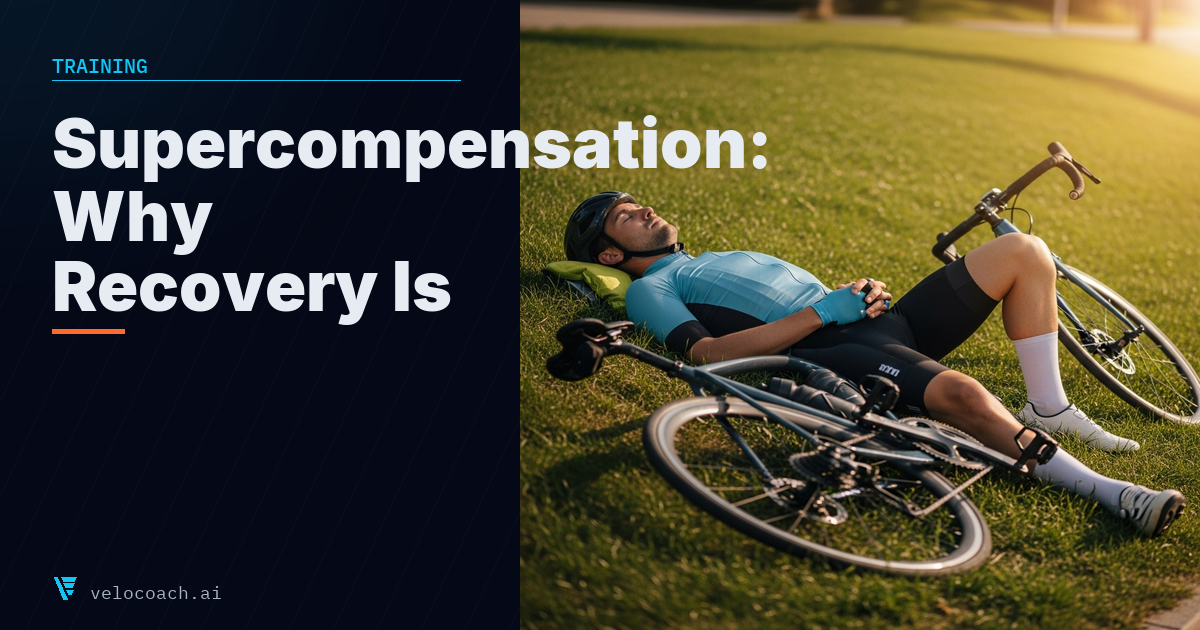
Why Your Legs Feel Great on Rest Days and Terrible on Hard Training Ones
There is a particular moment in a training block that confuses almost every cyclist who experiences it for the first time.
You have been training hard for three weeks. You are tired, your power numbers have been lower than expected, and you are starting to wonder whether you are getting slower rather than faster. Then you take a rest week. After a few days, something shifts. You feel good. Genuinely good. The legs feel fresh. You go out for an easy spin and the power comes effortlessly. You hit numbers you haven't seen in weeks without trying.
If you have never trained with a power meter, this feels mysterious. If you understand Fitness, Fatigue and Form, it is completely predictable.
Supercompensation: The Mechanism Behind Training Adaptation
The fundamental principle of physical training is that applying a training stress (load) to the body causes a temporary decrease in capacity (fatigue), followed by a recovery period in which the body rebuilds stronger than before. This is supercompensation.
Without recovery, the adaptation phase never happens. The training creates fatigue, the fatigue stays, and performance remains suppressed or declines. With appropriate recovery, the adaptation phase produces a genuine performance improvement that persists beyond the recovery period.
This is not a theory. It is the documented physiological response to training stress and is the reason every evidence-based training programme includes planned recovery periods. Training without recovery is not discipline. It is a physiological mistake.
What the Numbers Look Like During Supercompensation
Fitness is a 42-day rolling average of training load. It rises slowly during a training block and falls slowly during reduced load or rest.
Fatigue is a 7-day rolling average. It rises and falls much faster than Fitness, reflecting recent training.
Form is the difference: Fitness minus Fatigue. When you are in a hard training block, Fatigue is high, Form is negative (often in the -20 to -40 range for heavy training), and performance is suppressed relative to what your fitness level should produce.
When you enter a recovery week and reduce training, Fatigue drops faster than Fitness. Form rises. And performance improves, because the fatigue that was masking your true fitness level is clearing.
This is the experience many cyclists describe as feeling "surprisingly good" after a rest week. The fitness was always there. The fatigue was sitting on top of it.
Why Tired Feels Like Slow
During a hard training block, cyclists often misinterpret training-induced fatigue as fitness regression. The power numbers are lower than expected. Efforts that were manageable two weeks ago now feel hard. The logical conclusion is that fitness is declining.
The opposite is usually true. The lower power numbers reflect suppressed performance from accumulated Fatigue. The harder perceived effort reflects what researchers call RPE decoupling: a state where rate of perceived exertion is elevated relative to power output because the nervous system and muscular system are fatigued.
This is why training data over time is more valuable than any single session's numbers. A series of sessions where power is tracking lower than expected while training load is high is not a sign of detraining. It is a sign of appropriate training stress. The adaptation is coming.
What would genuinely indicate detraining is: training load is low, Fatigue is low, Form is positive or near zero, and power is still low. That combination suggests something other than normal training fatigue is in play.
Timing the Recovery Window
Supercompensation works on a predictable timeline:
Days 1-3 of rest week: Fatigue is still partially present. Performance may not feel dramatically different from the final days of the training block. Fatigue is beginning to drop, but not yet significantly below Fitness.
Days 4-5: This is when the supercompensation often becomes subjectively obvious. Form has risen meaningfully. The legs feel different. Not just less tired but genuinely better. Explosive efforts feel sharper. Sustained efforts feel easier.
Days 6-7: Peak freshness. Form is at its highest for the rest week. This is the ideal moment for an assessment session if you want to measure your fitness gains from the training block, because you are rested without being detrained.
Beyond day 10-14 of full rest: Without any training stimulus, Fitness starts declining at a rate of approximately 1 to 2% per day. Excessive rest turns freshness into detraining. The recovery week ends at the point of peak adaptation, not at the point of maximum comfort.
The Taper Paradox
This mechanism also explains the taper paradox that many cyclists experience before major races. As they reduce volume in the taper, performance temporarily decreases (the legs feel heavy, power feels off) before rebounding dramatically in the final days.
The initial suppression in taper reflects plasma volume redistribution, neural sharpness that adapts to reduced stimulus, and the psychological discomfort of reduced training. The later rebound reflects supercompensation completing as Fatigue drops below Fitness and Form climbs toward positive territory.
This pattern is well documented and accounts for the "taper madness" that most serious cyclists have experienced. Understanding the mechanism allows you to trust the process rather than react to the uncomfortable feelings by adding extra training.
Practical Implications
Take your rest weeks seriously. A proper rest week means genuinely reduced training, not a version of your normal week with one fewer session. Volume reduction of 40 to 50% is typical. Intensity reduction is equally important. The body needs to reduce both the volume and intensity signals to allow the supercompensation response.
Resist training when you feel good. The most common error in rest weeks is adding a hard session because you feel surprisingly well on day five. That feeling is the supercompensation working. Adding training at that moment disrupts the process and brings Fatigue back up before you have reaped the full benefit.
Use the data to calibrate trust. If your Fitness has been building for eight weeks, your Form is rising during the rest week, and you feel great, everything is working correctly. The data tells you the same story your legs are telling you, just more reliably.
---
Train with a coach that reads your data
VeloCoach AI connects to Garmin, Wahoo, Intervals.icu and Apple Health, and tells you exactly what to do next.
Download on the App Store