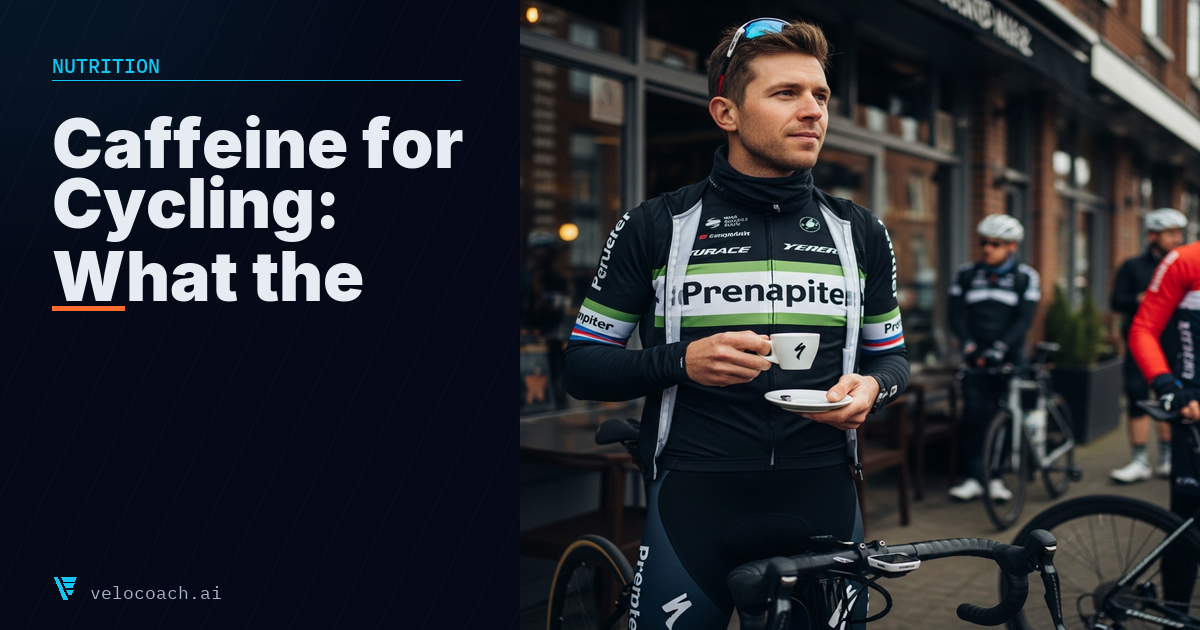
Caffeine for Cycling Performance: What the Evidence Actually Says
Caffeine is the most studied legal performance-enhancing substance in sports science. The evidence base is unusually robust compared to most supplements: hundreds of studies, consistently positive effects, and mechanisms that are well understood. If you are not using caffeine strategically in your training and racing, you are leaving measurable performance on the table.
Why Caffeine Works
Caffeine's primary mechanism is adenosine receptor blockade. Adenosine is a neurochemical that accumulates during wakefulness and promotes feelings of fatigue and drowsiness. Caffeine molecules are structurally similar to adenosine and bind to the same receptors without activating them, effectively blocking the fatigue signal.
The downstream effects are significant: perceived exertion decreases at a given power output, pain perception falls, alertness and concentration improve, and the motivation to sustain high-intensity effort increases. These are not subjective impressions. They are measurable neurological effects with quantifiable performance outcomes.
Caffeine also has modest peripheral effects: it increases adrenaline release, enhances calcium availability in muscle cells (improving contractile force), and may increase fat oxidation at lower intensities by altering fuel selection.
The Performance Numbers
A 2025 meta-analysis published in the British Journal of Sports Medicine, covering 120 studies and over 1,000 trained athletes, found that caffeine improved mean power output in cycling time trials and sustained efforts by an average of 4.3%. For context, a 4.3% improvement in a 40km time trial represents approximately 2 to 3 minutes of gained time. Aerodynamic improvements at the same cost would require thousands of pounds of equipment.
Specific performance improvements documented in the literature:
- Time trial performance: 3.3 to 4.8% improvement in mean power output
- VO2 max power: small but consistent improvements (2-3%) in maximal aerobic power
- Sprint power: 3 to 6% improvements in peak 30-second and 60-second power
- Time to exhaustion at a fixed intensity: improvements of 10 to 15% (riders can sustain a given power for significantly longer)
- Perceived exertion: reductions of 5 to 8% at submaximal intensities
These are consistent, substantial effects that hold across a wide range of training levels and testing conditions.
Dosing: How Much to Take
The effective dose range is 3 to 6 milligrams per kilogram of body weight. For a 70kg rider, this is 210 to 420mg.
3mg/kg produces meaningful performance benefits with minimal side effects for most people. This is a good starting dose if you are not accustomed to caffeine supplementation.
6mg/kg produces the maximum performance benefit but also increases side effects (anxiety, jitteriness, insomnia, gastrointestinal distress) for a proportion of athletes. Starting at 3mg/kg and increasing based on tolerance is sensible.
Doses above 6mg/kg have not been shown to produce additional performance benefits and substantially increase side effect risk. Caffeine is not a supplement where more is better above the effective range.
A single espresso contains roughly 60 to 80mg of caffeine. A strong cup of filtered coffee is 100 to 150mg. Standard caffeine tablets are 200mg. Caffeinated energy gels vary from 50 to 100mg.
For a 70kg rider aiming for 3mg/kg (210mg): two large coffees, two caffeine tablets, or three caffeinated gels during a session.
Timing: When to Take It
Peak blood caffeine concentrations occur approximately 45 to 60 minutes after ingestion. To maximise performance during a hard session or race, consume caffeine 45 to 60 minutes before the effort begins.
For longer events (gran fondos, road races), there is a strategic advantage to distributing caffeine across the event rather than front-loading it all before the start. One approach: a moderate dose (2mg/kg) 45 minutes before, then an additional 1-2mg/kg via caffeinated gels during the event, particularly during the final quarter when fatigue is highest.
For morning events when early caffeine consumption may be difficult, research supports caffeine being effective even when taken immediately pre-event, with slightly delayed onset of full effect.
Habituation: The Regular Coffee Drinker Question
A common concern among regular coffee drinkers is whether caffeine tolerance negates the performance benefit. This is worth addressing directly.
Caffeine tolerance does develop with regular consumption, but the evidence on whether this eliminates the performance benefit is mixed. Several studies have found that habitual caffeine consumers still show significant performance improvements from acute caffeine supplementation, even when controlling for their regular intake. The magnitude of the effect may be slightly smaller than in caffeine-naive individuals, but it is not eliminated.
The practice of "caffeine withdrawal" before an event (stopping caffeine for 3 to 7 days before a race to restore sensitivity) is popular in cycling culture. The evidence for this being necessary is limited, and the withdrawal period involves performance impairment (headaches, reduced alertness) that may offset any restored sensitivity. For most athletes, simply using caffeine strategically without full withdrawal is the more practical approach.
CYP1A2 Genetics: Why Caffeine Affects People Differently
One reason caffeine's effects vary between individuals is the CYP1A2 gene, which codes for an enzyme responsible for metabolising caffeine in the liver. Fast metabolisers (approximately 50% of the population) clear caffeine quickly, experience strong performance effects with less side effect risk, and sleep better after afternoon caffeine use. Slow metabolisers experience more side effects, longer duration of effect, and are more sensitive to sleep disruption.
Genetic testing (available through various consumer DNA services) can identify your CYP1A2 status and help calibrate dosing strategy.
Side Effects and Timing Constraints
Sleep. Caffeine has a half-life of approximately 5 to 7 hours (longer in slow metabolisers). Consuming caffeine in the afternoon can meaningfully disrupt sleep that night, which impairs recovery from training. For evening or afternoon sessions, consider whether the performance benefit from caffeine outweighs the potential sleep cost.
Gastrointestinal effects. Coffee in particular is a gastric acid stimulant. Some athletes experience GI discomfort during exercise after consuming coffee before riding. Using caffeine tablets or caffeinated gels (rather than coffee) reduces this effect for sensitive individuals.
Heart rate and anxiety. At higher doses, caffeine can cause elevated heart rate and anxiety, which interferes with pacing and perceived effort calibration. If 6mg/kg makes you feel wired and anxious rather than alert, reduce the dose.
---
Train with a coach that reads your data
VeloCoach AI connects to Garmin, Wahoo, Intervals.icu and Apple Health, and tells you exactly what to do next.
Download on the App Store