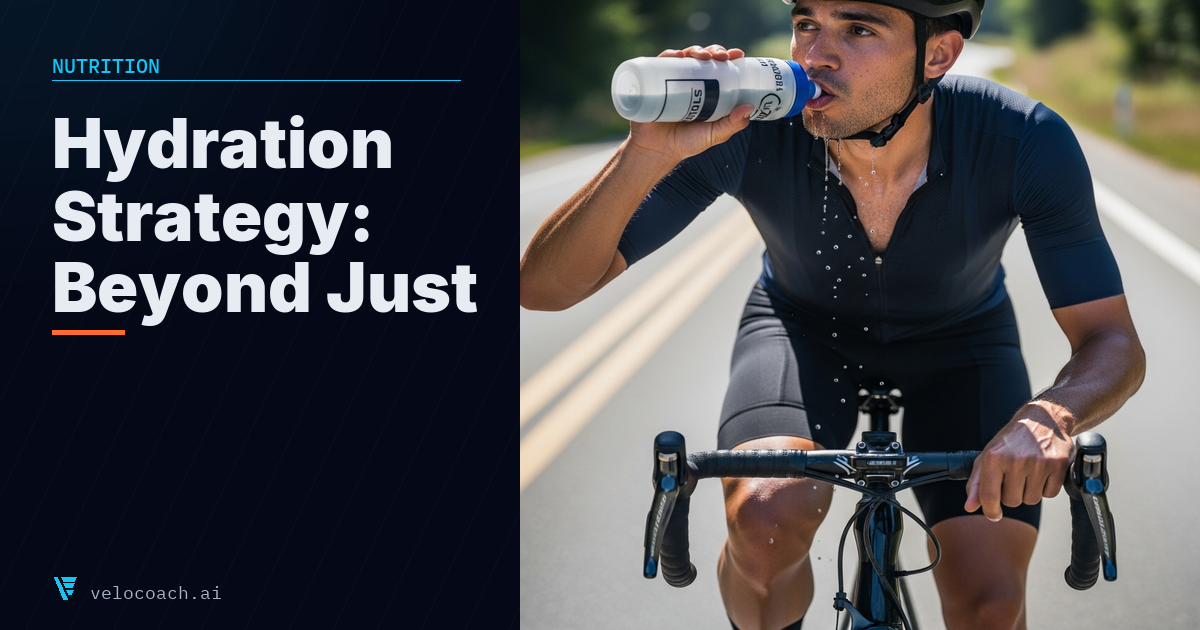
Hydration Strategy for Cyclists: Beyond Just Drinking Water
Every cyclist knows they should drink on the bike. Most do it reactively, drinking when thirsty, stopping when not. This approach leaves performance on the table even in moderate conditions, and in hot weather it leads to measurable performance degradation that adequate hydration strategy would have prevented.
Understanding hydration as a performance system, rather than just "drink enough water," changes how you approach it.
What Dehydration Does to Performance
The performance consequences of dehydration are well established and begin at lower fluid deficits than most cyclists assume.
A fluid deficit of 2% of body weight (1.4 litres for a 70kg rider) produces measurable reductions in aerobic performance. Research consistently shows 3 to 7% reductions in power output at threshold and VO2 max intensities at this deficit level.
At 3% deficit, cognitive function and pacing judgement begin to deteriorate alongside further physical performance losses. Athletes at 3% deficit show impaired decision-making and reduced ability to accurately gauge their own effort.
At 5% or more, serious performance degradation occurs: aerobic capacity reduces by approximately 30%, coordination worsens, and the risk of heat illness increases substantially.
The crucial point is that thirst is a lagging indicator. By the time you feel meaningfully thirsty, you are typically at 1 to 2% deficit. Drinking to thirst is not the same as staying ahead of dehydration.
Sweat Rate Varies Enormously Between Individuals
This is the piece most hydration advice misses. Sweat rates among cyclists range from roughly 0.5 litres per hour to over 2.5 litres per hour, with significant variation based on:
- Exercise intensity
- Environmental temperature and humidity
- Acclimatisation status
- Individual physiology
The same rider can have a sweat rate of 0.8 litres per hour in a cool UK spring day and 1.8 litres per hour in a hot summer race or training camp.
This means generic hydration advice ("drink 500ml per hour") is likely to be wrong in both directions for many riders. Some will be drinking more than they need; many will be drinking significantly less than required.
Calculating Your Personal Sweat Rate
The most reliable way to calibrate your hydration needs is the sweat rate test:
- Weigh yourself naked, immediately before a ride (no food or drink in the 20 minutes prior).
- Complete a ride of known duration (60 to 90 minutes) in representative conditions, noting how much you drink.
- Weigh yourself naked immediately after (without eating or drinking).
- Calculate: (Pre-ride weight - Post-ride weight + weight of fluid consumed) = fluid lost to sweat.
- Divide by ride hours to get hourly sweat rate.
Do this in different conditions (cool, moderate, hot) and at different intensities. The results will likely surprise you and give you specific targets for different contexts.
A 1kg body weight loss corresponds to approximately 1 litre of fluid deficit. Any post-ride weight loss beyond 1 to 2% warrants reviewing your drinking strategy.
What to Drink: Water vs Electrolytes
Plain water is adequate for rides under 60 to 90 minutes in cool conditions. For anything longer, or in warm conditions, electrolytes matter.
Sweat contains sodium, chloride, potassium, magnesium, and calcium. Sodium is the dominant electrolyte by concentration. Individual sodium concentration in sweat varies widely, from roughly 500mg per litre to over 2,000mg per litre. Again, this individual variation matters more than generic recommendations.
Why sodium matters in hydration drinks:
Sodium in the drink stimulates thirst, which encourages drinking. It helps retain fluid in the body rather than excreting it through urine. And it replaces a portion of what is lost through sweat, preventing hyponatraemia (sodium dilution from drinking too much plain water) in very long events.
For rides of 2 hours or more, particularly in warm conditions, use an electrolyte drink or add electrolyte tablets to your water bottles rather than drinking plain water. Target 500 to 1,000mg of sodium per litre of fluid in your drink.
Drinking Frequency vs Volume
Consistent, frequent sipping is more effective than large, infrequent drinks. The gut can absorb fluid at a limited rate (roughly 600 to 1,000ml per hour, depending on the solution concentration and individual factors). Consuming more than this in a short period does not accelerate absorption and causes bloating.
A practical strategy: set a drinking prompt every 15 to 20 minutes rather than drinking when thirsty. Two to three large mouthfuls (roughly 150 to 200ml) every 15 to 20 minutes maintains a steady drinking rate that most riders can absorb without GI discomfort.
On long climbs or during intervals when drinking is mechanically inconvenient, front-load your drinking before the hard section rather than trying to catch up during it.
Pre-Ride Hydration
Arrive at sessions well hydrated. Urine colour is a practical check: pale yellow indicates adequate hydration, dark yellow indicates deficit.
If you are riding in the morning, the previous evening's fluid intake matters. Drinking 500 to 750ml of water with dinner and having another glass before bed sets you up better than trying to hydrate immediately before a morning ride.
On days before key events or long rides, deliberately increase fluid intake by 500 to 1,000ml above your normal level. This expands plasma blood volume, which improves cardiovascular efficiency during the event.
Post-Ride Rehydration
For full rehydration after a hard or long ride, consume 1.5 times the fluid volume you lost (if you lost 1 litre, drink 1.5 litres). The extra 50% accounts for ongoing urine production. Include sodium in your post-ride fluids or food to retain what you drink rather than excreting it.
Milk is an unusually effective rehydration drink. Its protein and electrolyte content promote fluid retention significantly better than plain water or most commercial sports drinks, and it provides protein for recovery simultaneously.
The first 30 to 60 minutes after a ride is the window where rehydration is most efficient. Drinking half your rehydration target in this window, then continuing steadily over the following two hours, achieves more complete restoration than spreading it evenly across many hours.
Heat Acclimatisation and Hydration
As you acclimatise to hot conditions over 7 to 14 days of heat exposure, plasma blood volume expands, sweat rate increases (allowing earlier and more efficient cooling), and sweat sodium concentration decreases (meaning you conserve sodium more effectively). Acclimatised athletes can perform far better in heat with the same hydration strategy than unacclimatised athletes.
If you have a hot-weather event coming up (training camp in Spain, a summer sportive), the combination of heat acclimatisation and well-executed hydration strategy produces a compounding advantage.
---
Train with a coach that reads your data
VeloCoach AI connects to Garmin, Wahoo, Intervals.icu and Apple Health, and tells you exactly what to do next.
Download on the App Store