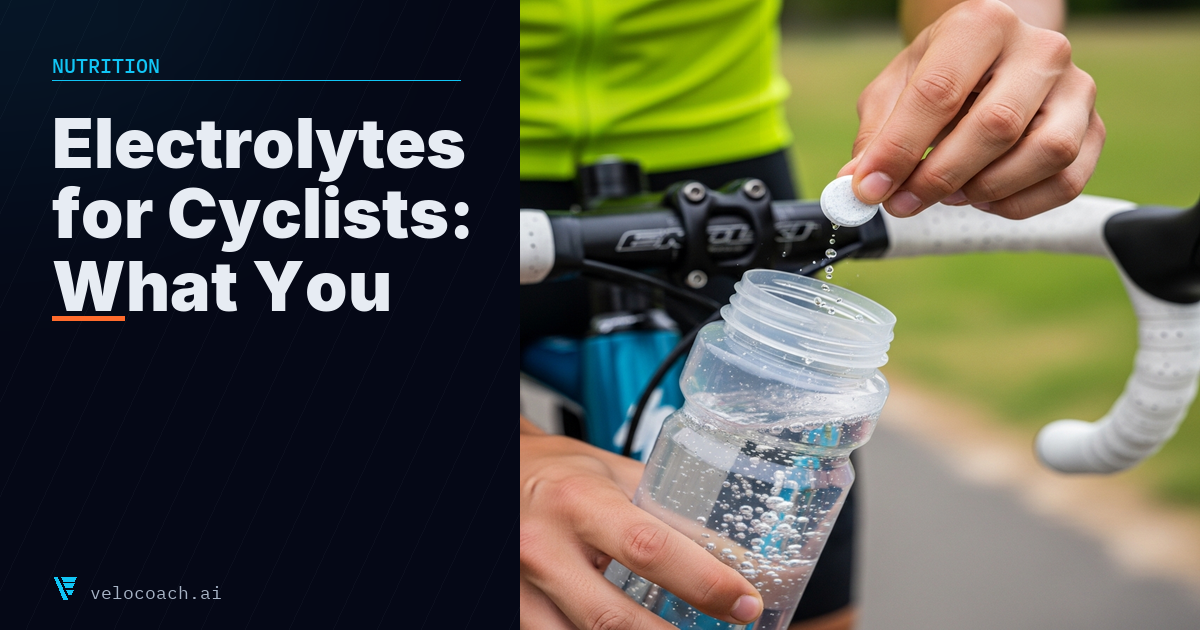
Electrolytes for Cyclists: What You Actually Need and Why
Electrolytes have become something of a marketing category, with a bewildering array of products claiming to optimise your performance, prevent cramps, and support recovery. Cutting through the noise requires understanding what electrolytes actually do, which ones matter most for cycling, and under what conditions supplementation genuinely helps.
What Electrolytes Are
Electrolytes are minerals that carry an electrical charge when dissolved in fluid. The main electrolytes relevant to cycling performance are sodium, potassium, magnesium, chloride, and calcium. They regulate fluid balance inside and outside cells, support nerve conduction and muscle contraction, and maintain blood pH within the narrow range required for normal physiological function.
In practical terms for cyclists: without adequate electrolytes, muscle contractions become impaired, fluid retention decreases, cardiovascular function suffers, and at extremes, dangerous conditions like hyponatraemia (low blood sodium) can develop.
Sodium: The One That Matters Most
Sodium is far and away the most important electrolyte for cycling performance. It is the dominant electrolyte in blood and extracellular fluid, and it is lost in substantial quantities through sweat.
Why sodium dominates the conversation:
Fluid balance. Sodium determines how much fluid your body retains. When sodium falls, the kidneys excrete fluid to restore the sodium-to-fluid ratio, accelerating dehydration. When you consume sodium alongside fluid, retention is dramatically better.
Thirst stimulus. Sodium is the primary driver of thirst. A drink with sodium in it stimulates further drinking, helping you stay ahead of dehydration voluntarily.
Sweat losses. The average cyclist loses 600 to 1,500mg of sodium per litre of sweat, though individual variation is enormous (some athletes are "salty sweaters" losing up to 2,000mg per litre). On a hot day with high sweat rates, sodium losses can reach 4 to 6 grams in a single ride.
For any session over 90 minutes in warm conditions, sodium is not optional. Plain water without sodium will not keep pace with sweat-driven electrolyte losses, and aggressive drinking of plain water in this situation risks diluting blood sodium, impairing performance even while appearing hydrated.
Target 500 to 1,000mg of sodium per litre of fluid in your drink for rides over 90 minutes.
Potassium: The Intracellular Partner
Potassium is the main electrolyte inside cells and works in tandem with sodium to maintain the electrical gradients that drive nerve and muscle function. It is also lost in sweat, though at lower concentrations than sodium.
For most cyclists, dietary potassium intake is adequate. Bananas, potatoes, avocados, citrus fruits, and dairy products are all potassium-rich. Unless you are sweating heavily for many hours, potassium losses through sweat are unlikely to outpace dietary replenishment over the course of a day.
Including some potassium in your electrolyte drink is sensible for long events (sportives, long training camps), but isolated potassium supplementation is rarely necessary.
Magnesium: Important but Often Misunderstood
Magnesium is involved in over 300 enzymatic reactions in the body, including energy production, protein synthesis, and muscle function. It is also lost in sweat.
Chronic magnesium deficiency is relatively common in the general population and has been found at higher-than-average rates in endurance athletes who sweat heavily and may not replace losses through diet. Symptoms of deficiency include muscle cramping, disturbed sleep, fatigue, and impaired recovery.
However, magnesium supplementation as an acute performance intervention (taking it in the last few minutes before or during a ride) has limited evidence. The benefit of magnesium supplementation is most clearly seen in individuals who are chronically deficient. For athletes with adequate magnesium status, supplementation does not provide additional performance benefit.
A practical approach: ensure dietary magnesium is adequate (nuts, seeds, dark leafy vegetables, wholegrains), consider a daily magnesium glycinate or malate supplement if sleep quality or muscle cramping are ongoing issues, and do not rely on magnesium for acute performance enhancement.
Muscle Cramps: The Electrolyte Myth
One of the most persistent misconceptions in endurance sports is that muscle cramps are caused by electrolyte deficiency. This is partially true in extreme cases (severe sodium depletion in ultra-endurance events lasting many hours) but does not apply to most exercise-induced cramping.
Research over the past decade has substantially shifted the consensus. The most supported current theory for exercise-associated muscle cramps is neuromuscular fatigue: overloaded motor neurons misfiring when they are fatigued. This explains why cramps most commonly occur in muscles performing the most work, in the most fatigued states, in athletes who are inadequately conditioned for the demands placed on them.
Electrolyte replacement helps prevent cramps primarily by maintaining fluid balance and therefore delaying neuromuscular fatigue. It is not a direct cramp remedy through some specific ionic mechanism. An athlete who cramps regularly should look at training load, conditioning, pacing, and fuelling (energy, not just electrolytes) before concluding they need more salt tablets.
When to Use Electrolyte Supplements
Rides under 90 minutes in cool conditions: Electrolyte supplementation is not necessary. Your pre-ride dietary intake is sufficient, and fluid losses are manageable with plain water.
Rides 90 minutes to 3 hours in moderate conditions: An electrolyte drink or a pinch of sodium in your water bottle is sensible. This is where most athletes benefit from transitioning from plain water to electrolyte-included fluid.
Rides over 3 hours or any ride in hot conditions: Electrolyte management is essential. Higher sodium intake per litre, consideration of multiple electrolytes, and monitoring of fluid intake is warranted. Electrolyte capsules or tablets (such as SiS Go Hydro, Precision Hydration, or similar) allow flexible dosing independent of fluid intake.
Long events in heat: Consider electrolyte testing or high-sodium supplementation if you are a known heavy sweater. Some athletes benefit from starting an event with an additional sodium bolus (an electrolyte drink containing 1,000mg+ sodium per 500ml) before the ride begins, to ensure starting sodium status is optimal.
Reading Electrolyte Products
Most commercial electrolyte products contain sodium, potassium, and magnesium. The key variable to check is sodium content. Many products marketed as "electrolyte drinks" contain disappointingly small amounts, sometimes only 100 to 200mg of sodium per serving, which is inadequate for heavy sweating sessions.
For effective electrolyte replacement during hard sessions or hot conditions, target products containing at least 500 to 700mg sodium per 500ml serving. Precision Hydration, Skratch Labs, and similar products aimed at endurance athletes generally hit this range.
---
Train with a coach that reads your data
VeloCoach AI connects to Garmin, Wahoo, Intervals.icu and Apple Health, and tells you exactly what to do next.
Download on the App Store