Long Ride Fuelling: How to Eat Your Way Through 4+ Hour Rides
The bonk. Hitting the wall. Whatever you call it, the experience of severe glycogen depletion during a long ride is one of the most unpleasant things that happens in cycling. Legs stop working. Thinking becomes foggy. Simple physical efforts feel impossible. And unlike most forms of fatigue, glycogen depletion cannot be overcome by willpower. You must either eat or slow down dramatically.
Every bonk in training or racing is a preventable nutritional error. Understanding the physiology of long-ride fuelling and building a reliable strategy eliminates this failure mode.
The Glycogen Clock
Your muscles store approximately 500 grams of glycogen on average, representing roughly 2,000 kilocalories of readily available carbohydrate fuel. The liver stores an additional 80 to 100 grams. Total onboard carbohydrate: roughly 2,500 to 2,600 kilocalories.
At moderate cycling intensity (Zone 2 to Zone 3), you burn approximately 600 to 800 kilocalories per hour depending on your weight and power output. A significant proportion of this comes from carbohydrate, even if fat is also being oxidised. At threshold and above, carbohydrate provides an increasing proportion of fuel.
Without any fuelling, a well-trained cyclist with full glycogen stores will deplete to performance-limiting levels in 2 to 3 hours of moderate-intensity riding. Faster at higher intensities.
This means any ride over 2 hours requires active fuelling. Not optional fuelling when you feel hungry. Active fuelling that begins before hunger signals arrive, because hunger is a lagging indicator that follows glycogen depletion rather than preceding it.
Fuelling Targets
The maximum rate at which the gut can absorb carbohydrate and deliver it to working muscles is approximately 60 grams per hour from a single carbohydrate source (glucose/maltodextrin), or up to 90 to 100 grams per hour when combining multiple carbohydrate types (glucose plus fructose).
This is the physiological basis of the "dual-transporter" approach to high-carbohydrate fuelling. The intestinal transporters for glucose (SGLT1) and fructose (GLUT5) are independent. Using both simultaneously allows higher total carbohydrate absorption than either alone.
For rides of 2 to 3 hours: 60 grams of carbohydrate per hour is adequate and achievable with standard glucose-based foods and drinks. Most sports nutrition products are designed around this rate.
For rides over 3 hours: Targeting 80 to 100 grams per hour using glucose-fructose combinations significantly reduces glycogen depletion and maintains performance in the final hours of a long ride. This requires products that specify their glucose-to-fructose ratio (many energy gels, some bars, and specific high-carbohydrate drinks provide 2:1 glucose-to-fructose ratios).
For rides over 5 hours (gran fondos, long events): The sustained high carbohydrate demand of very long events requires consistent, disciplined fuelling from the start. Athletes who wait until they feel they need fuel in a 6-hour ride have already fallen hours behind their optimal fuelling schedule.
What to Eat
Gels: Convenient, known carbohydrate content, rapid digestion. Best for high-intensity efforts when solid food becomes hard to eat. Most gels provide 20 to 25g of carbohydrate. At 60g/hour, this is 2.5 to 3 gels per hour, which many cyclists find excessive if gels are their only source.
Energy bars: Slower digesting, more enjoyable to eat at lower intensities, typically 30 to 45g carbohydrate per bar. Good for the first half of a long ride when intensity is lower and gastric emptying is more forgiving.
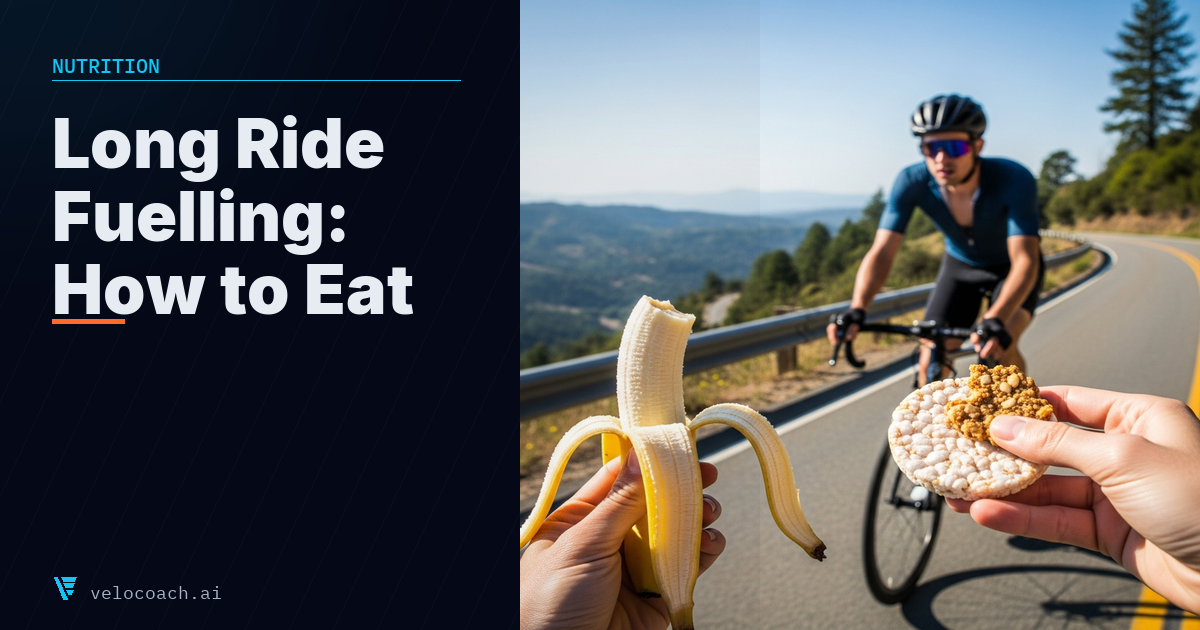
Real food: Bananas, rice cakes, dates, fig rolls, PB&J sandwiches. Excellent palatability, appropriate carbohydrate content, and often more enjoyable on long rides than exclusively gel-based fuelling. At lower intensities, real food is digested without issue.
Energy drinks: Provide carbohydrate and hydration simultaneously. Well-formulated options (Maurten, Science in Sport, Precision Hydration with carbohydrate) provide significant carbohydrate per bottle. The combination of liquid and solid carbohydrate is an effective strategy for meeting high hourly targets without GI distress.
Variation is your friend: Using a mix of gels, bars, and real food maintains palatability on long rides. Flavour fatigue (the reluctance to eat because you are bored of gels) is a genuine limiting factor on rides over 4 hours.
Timing: The Every-20-Minute Rule
Set a reminder to eat or drink every 20 minutes and follow it regardless of hunger. This is the most practical single change most cyclists can make to their long-ride fuelling.
Begin fuelling within the first 30 minutes, before glycogen is meaningfully depleted. Early fuelling spares glycogen and gives the gut time to establish absorption at pace before intensity climbs.
By the time you feel hungry or your legs feel heavy, you are already 30 to 60 minutes behind on fuelling and will spend the next hour paying back the deficit.
Gut Training for High Carbohydrate Intake
Absorbing 90 to 100 grams of carbohydrate per hour requires a gut that is trained to handle that volume. Athletes who attempt high carbohydrate intake without a gut training protocol frequently experience GI distress (nausea, bloating, cramping, diarrhoea) that limits their ability to fuel effectively.
The gut training protocol: progressively increase carbohydrate intake during training rides over 4 to 6 weeks. Start at 60g/hour, build to 80g/hour, then 90g/hour. Use the same products you intend to race with. The gut's carbohydrate transport capacity and tolerance improves with practice.
This is not optional for cyclists targeting high-carbohydrate fuelling in long races or events. Attempting race-day fuelling targets without training the gut first leads to GI distress at exactly the worst possible time.
Practical Fuelling Plan for a 5-Hour Ride
Ride start: Check glycogen is full (proper pre-ride meal 2 to 3 hours before). 30 minutes: First gel or bar. Begin every-20-minute eating schedule. Hour 1: 60g carbohydrate (2 gels or 1 bar + 1 gel). Hour 2: 70g carbohydrate (mix of gel and real food). Hours 3-5: 80 to 100g per hour, using glucose-fructose products. This is where gut-trained capacity matters most. Total carbohydrate consumed: 370 to 430g for a 5-hour ride.
Carry more than you think you need. Running out of food on a 5-hour ride requires improvising at unfamiliar cafes or convenience stores where options may not be suitable, or grinding home on depleted glycogen.
---
Train with a coach that reads your data
VeloCoach AI connects to Garmin, Wahoo, Intervals.icu and Apple Health, and tells you exactly what to do next.
Download on the App Store