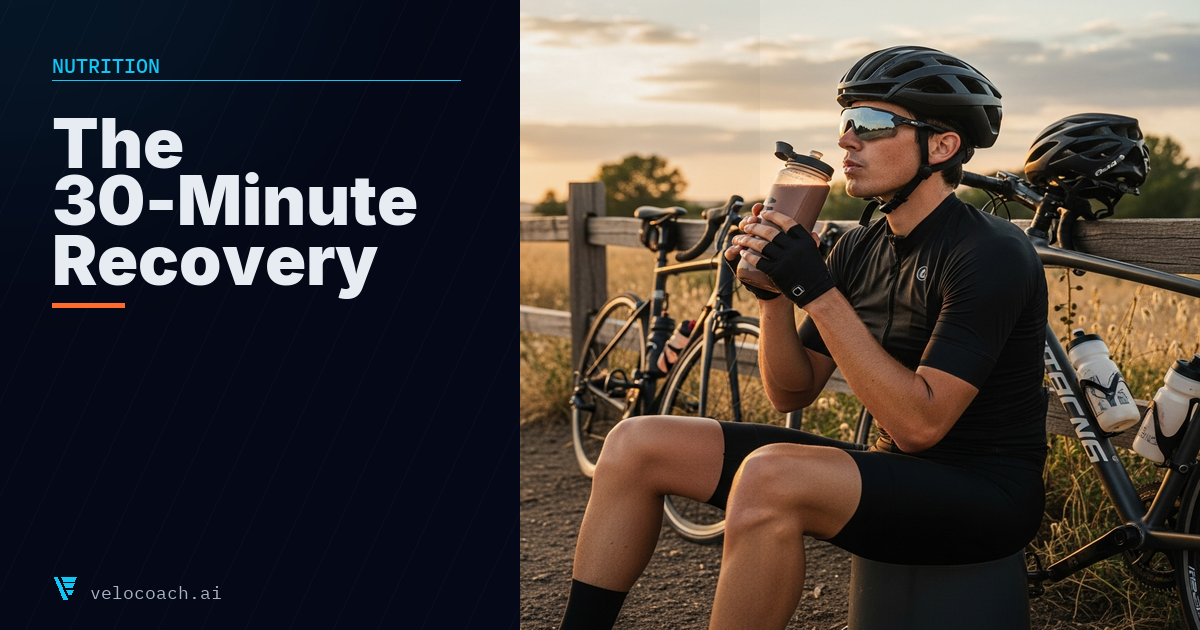
What Your Post-Ride Recovery Window Is Costing You
You finish a hard session. You are tired, probably a bit damp, and the last thing you feel like doing is thinking carefully about what to eat. So you have a shower, make a cup of tea, and figure you'll sort food when you're hungry.
This is one of the most common nutrition mistakes in cycling training, and it costs real adaptation over a full training season.
The 30 to 45 minutes immediately after hard training is when your muscles are most primed to absorb glycogen and initiate protein synthesis. Miss this window and you delay the recovery process that should start immediately. Hit it with the right nutrition and you meaningfully improve your readiness for the next session.
Here is the science, the practical guidance, and why it matters more than most cyclists think.
The Physiology of Post-Ride Recovery
Hard cycling training depletes muscle glycogen, the stored carbohydrate that fuels high-intensity effort. Replenishing it as quickly as possible after training serves two purposes: it restores fuel stores for the next session, and it creates a more anabolic (muscle-building) environment in the immediate post-exercise period.
Glycogen resynthesis rate is highest in the first 30 minutes after exercise. Research consistently shows that consuming carbohydrates immediately after glycogen-depleting training increases resynthesis rate by approximately 50% compared to delaying intake by two hours. If you train twice in a day, or have back-to-back training days, this difference is performance-critical. A rider who replenishes promptly is genuinely better fuelled for their next session than one who eats the same total food but delays it by three hours.
The second component is protein. High-intensity cycling creates muscle protein damage through the eccentric and concentric forces of repeated pedalling and, increasingly, through strength training alongside cycling. Muscle protein synthesis (the repair and growth response) begins within hours of training but is significantly enhanced by protein availability in that post-exercise window.
The optimal ratio for post-exercise recovery nutrition is approximately 3:1 carbohydrate to protein by weight. For a typical training session, this might look like 60-80g of carbohydrates and 20-30g of protein in the immediate recovery window.
Why the Window Matters More for Cyclists Than for Gym Goers
The post-exercise nutrition window is discussed heavily in gym and bodybuilding culture, where the focus is primarily on protein synthesis for muscle growth. For cyclists, the glycogen component is equally or more important.
Cyclists doing 10 to 15 hours per week of training may complete 2,000 to 3,000 calories worth of glycogen-depleting work per week, much of it in back-to-back sessions. A triathlete or stage racer doing higher volumes has an even greater glycogen demand. Unlike a recreational gym-goer who trains once a day with ample time between sessions, the cyclist who trains on consecutive days has a narrow window to restore fuel stores before the next training stimulus arrives.
Failing to hit the recovery window on Monday's hard session means Tuesday's ride starts with lower glycogen stores. If Tuesday is also a quality session, you are doing that session under-fuelled. The adaptation quality of both sessions is compromised. Over a 12-week training block, this compounds into significantly worse outcomes than the individual session impacts suggest.
What to Eat and When
Timing: Within 30 minutes of finishing the ride. Ideally within 15 to 20 minutes. This is the window of maximum insulin sensitivity and glucose transporter activation. The longer you wait beyond 45 minutes, the more the opportunity narrows.
Carbohydrates: Target 1 to 1.5g per kg of body weight in the immediate recovery window. For a 70kg rider, that is 70 to 105g of carbohydrates. Fast-digesting sources are appropriate here: white rice, banana, a carbohydrate drink, white bread, or specific recovery products. The speed of absorption matters more in this window than glycaemic index concerns.
Protein: 20 to 30g of high-quality protein alongside the carbohydrates. Whey protein is absorbed faster than casein and is well-studied in this context, though any complete protein source (eggs, chicken, Greek yogurt, milk) works if consumed quickly enough. The combination of carbohydrate and protein produces a synergistic insulin response that accelerates both glycogen synthesis and protein synthesis.
Practical options that hit both targets quickly: - 500ml chocolate milk (approximately 50-60g carbs, 16g protein), genuinely one of the best-researched recovery drinks - Recovery shake using 40g carb powder and 30g whey protein - White rice with chicken and a piece of fruit - Greek yogurt with banana and honey - Two to three rice cakes with peanut butter and a banana
The options above are not exotic sports nutrition. They are accessible, inexpensive, and backed by the research as effective.
What to Avoid in the Recovery Window
High-fat foods. Fat slows gastric emptying, which reduces the speed of carbohydrate absorption into the bloodstream. The recovery window is not the time for a full English breakfast, a burger, or anything involving significant quantities of cheese or cooking oil. Save those for later meals once the immediate recovery window has been covered.
High-fibre foods. Same principle: fibre slows absorption. Wholegrain bread, beans, and vegetables are excellent choices across the rest of the day but are not optimal recovery window foods.
Caffeine. Some research suggests caffeine alongside carbohydrate improves glycogen resynthesis slightly. However, if your training is in the evening and caffeine will impair sleep, that trade-off is not worth it. Sleep drives more recovery than any single nutritional intervention.
Nothing. The most common error. "I'm not hungry yet" is a common post-ride experience, particularly after rides longer than two hours, because gut blood flow is reduced during hard exercise. The absence of hunger is not a signal that nutrition can wait. It is a physiological side effect of the exertion. Eat anyway, even if it is liquid nutrition if solid food is unappealing.
The Full Recovery Nutrition Timeline
0-30 minutes: Carbohydrate and protein recovery meal or shake as described above.
30-90 minutes: Rehydration. Aim for 1.5 litres of fluid per kg of bodyweight lost during the ride. Weigh yourself before and after sessions occasionally to calibrate this. Most cyclists underestimate fluid loss, particularly in cooler weather where sweat evaporates quickly and is less visible.
2-3 hours post-ride: A full balanced meal containing carbohydrates, protein, and some fat. This is the meal where nutritional quality, fibre, and vegetables matter most. The urgency has passed. Now you are optimising.
Evening before a hard next-day session: Consider a higher-carbohydrate evening meal to continue glycogen top-up overnight.
---
Train with a coach that reads your data
VeloCoach AI connects to Garmin, Wahoo, Intervals.icu and Apple Health, and tells you exactly what to do next.
Download on the App Store