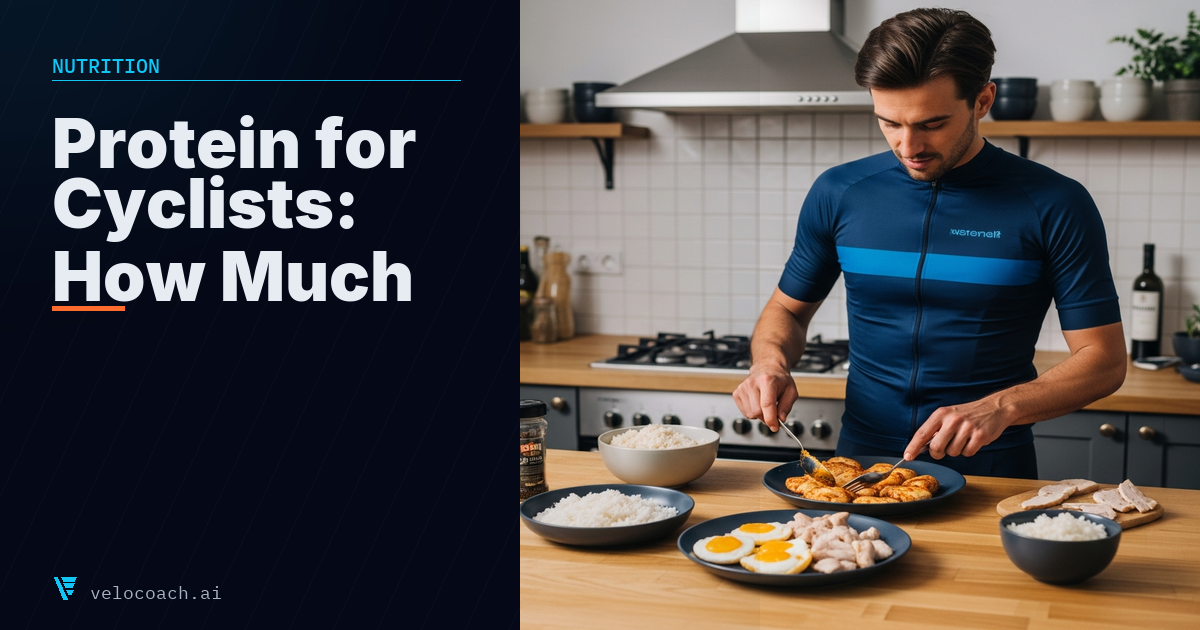
Protein for Cyclists: How Much, When, and Why It Matters More Than You Think
Protein is discussed far less in cycling communities than in strength training circles. This is partly justified: cyclists do not need the protein intakes of bodybuilders. But it has overcorrected into an assumption that protein timing and quantity do not matter for endurance athletes. They do, particularly for training adaptation, injury resilience, and muscle maintenance during high-volume blocks.
What Protein Does in a Cyclist's Body
In the context of cycling training, protein serves three primary functions:
Muscle protein synthesis: Exercise creates micro-damage to muscle tissue. Protein provides the amino acid substrate for repairing and rebuilding that tissue. This process, called muscle protein synthesis (MPS), is the molecular basis of training adaptation. Without adequate protein, MPS is limited, and training stimuli convert less effectively into structural and functional improvements.
Connective tissue repair: Tendons, ligaments, and cartilage rely on protein (specifically collagen synthesis) for repair and maintenance. Overuse injuries are more common in cyclists with chronically low protein intake, partly because connective tissue recovery is impaired.
Lean mass preservation during calorie restriction: Cyclists who are managing body weight or eating at a caloric deficit during certain training phases risk losing muscle mass if protein is inadequate. Sufficient protein intake preserves lean mass while fat is preferentially lost.
How Much Protein Do Cyclists Actually Need?
The recommended daily allowance (RDA) of 0.8g per kilogram of body weight is a minimum to prevent deficiency in sedentary individuals. It is not appropriate for training cyclists.
Current sports nutrition consensus places the optimal intake for endurance athletes at:
1.6 to 2.0g per kilogram of body weight per day for most training phases.
A 70kg cyclist should target approximately 112 to 140g of protein per day. This is significantly more than many recreational cyclists consume.
During heavy training blocks, altitude camps, or calorie-restricted phases, the upper end of this range (2.0g/kg) is appropriate because protein turnover is higher and the risk of net muscle protein breakdown increases.
For masters cyclists over 40, slightly higher intakes (2.0 to 2.2g/kg) help compensate for age-related reductions in anabolic response to protein. Older muscle tissue shows reduced MPS response per gram of protein consumed, so higher intakes are needed to achieve the same stimulus.
When to Eat Protein: The Timing Evidence
The "anabolic window" concept (a narrow post-exercise window in which protein consumption is uniquely effective) has been significantly revised by more recent research. The acute post-exercise window is real but broader than previously thought, probably extending 4 to 6 hours rather than the often-cited 30 minutes.
That said, protein timing does matter, and the most practically supported recommendations are:
Post-ride: Consuming 20 to 40g of protein within 60 minutes of finishing a session optimises MPS. If you have eaten a normal meal less than 4 hours before the ride, the urgency of post-ride protein is reduced. If you rode fasted or semi-fasted, the post-ride protein window matters more.
Before sleep: Consuming 30 to 40g of protein (casein is particularly studied here due to its slow digestion) in the 30 to 60 minutes before sleep has been shown to significantly increase overnight MPS and improve recovery compared to not eating pre-sleep. Cottage cheese, Greek yoghurt, or a casein shake are practical options.
Even distribution across the day: Research consistently supports spreading protein intake across 3 to 4 meals (each containing 30 to 40g) rather than concentrating it in one or two large meals. The muscle protein synthesis response to a single meal plateaus at roughly 40g; eating 80g at once does not produce twice the MPS of two meals of 40g each.
Protein Sources and Quality
Not all protein sources are equivalent for MPS. Protein quality is determined primarily by leucine content and amino acid completeness. Leucine is the branching-chain amino acid that most directly triggers the mTOR pathway responsible for initiating MPS.
High-quality animal sources: Chicken, turkey, beef, fish, eggs, dairy (especially whey protein and Greek yoghurt). These are complete proteins with high leucine content and excellent MPS stimulation per gram.
Plant-based sources: Individually lower in leucine and often incomplete in amino acid profile. However, combining plant proteins (rice + pea, for example, as in many vegan protein powders) creates a complete amino acid profile. Plant-based cyclists can meet their protein needs; they simply need to eat slightly more total protein (2.0 to 2.2g/kg rather than 1.6 to 1.8g/kg) and combine protein sources thoughtfully.
Whey protein: Among the best-studied protein supplements. High leucine content, rapid digestion (ideal post-exercise), and excellent MPS response per gram. Not magic, but genuinely effective if whole food options are inconvenient around training.
Protein and Body Composition
Cyclists attempting to reduce body weight while maintaining performance face a specific challenge: caloric restriction that impairs training adaptation. High protein intake during weight loss phases is critical for two reasons.
First, it preserves muscle mass. Research consistently shows that higher protein intakes during calorie restriction reduce lean mass loss and increase fat mass loss compared to moderate protein intakes at the same caloric deficit.
Second, protein is the most satiating macronutrient. A higher protein diet naturally reduces hunger at a given calorie level, making adherence to a caloric deficit easier without excessive restriction or negative training effects.
The practical approach for cyclists managing weight: keep protein at 2.0g/kg or above, reduce calories from carbohydrate and fat (particularly on non-training days or easy days), and protect the carbohydrate intake needed to fuel quality sessions.
Common Protein Mistakes in Cycling
Not counting dairy and eggs as protein sources. Many cyclists who think their protein intake is low are closer to target than they realise once all sources are counted. Tracking intake for 5 to 7 days gives an accurate baseline.
Skipping post-ride protein because the ride was "easy." MPS is stimulated even by easy training. Post-ride protein supports recovery regardless of session intensity.
Focusing only on supplements. Whole food protein sources are nutritionally superior in most contexts. Supplements fill gaps; they do not replace a diet built around quality protein foods.
---
Train with a coach that reads your data
VeloCoach AI connects to Garmin, Wahoo, Intervals.icu and Apple Health, and tells you exactly what to do next.
Download on the App Store