Pre-Ride Nutrition: The Complete Guide to Fuelling Before You Ride
What you eat before a ride shapes your performance more than most cyclists realise. The difference between arriving at a key session properly fuelled versus underfuelled can affect power output, perceived effort, and the quality of the adaptation you get from the session. Get it right consistently and training quality improves across the board.
Why Pre-Ride Nutrition Matters
Your muscles run primarily on glycogen during moderate to high-intensity cycling. Glycogen is stored in muscle tissue and the liver. You wake up in the morning with liver glycogen partially depleted from overnight metabolic demands, even if your muscle glycogen is intact from the previous day's recovery eating.
The state of your glycogen stores before a session directly affects your ability to sustain quality work. A session that begins with depleted glycogen will feel harder, your power at a given RPE will be lower, and your ability to complete high-quality intervals will be compromised.
On the other hand, a large meal consumed immediately before a session can impair performance by diverting blood to the gut for digestion, potentially causing gastrointestinal discomfort, and in some cases triggering reactive hypoglycaemia (a brief blood sugar drop in response to the insulin spike from a high-carbohydrate pre-ride meal).
Pre-ride nutrition is about finding the right balance: enough fuel to support the session, consumed with enough lead time to avoid digestive issues.
The 3-4 Hour Pre-Ride Meal
If you have time, a proper meal 3 to 4 hours before a key session gives you the best of all worlds. Carbohydrates are digested, glycogen stores are topped up, blood glucose is stable, and gastric emptying is complete. You arrive at the session fuelled without digestive interference.
What this meal should contain:
Carbohydrates: 1 to 4 grams per kilogram of body weight, depending on session intensity. For a 70kg rider heading into a threshold session, 2-3g/kg means 140 to 210g of carbohydrate. This is achievable through oats, rice, bread, pasta, or fruit.
Moderate protein: 20 to 30g. Supports recovery from previous training and satiety without slowing gastric emptying significantly.
Low fat and fibre: Both slow digestion and increase GI discomfort risk during exercise. Pre-ride is not the time for a high-fat meal or a large salad.
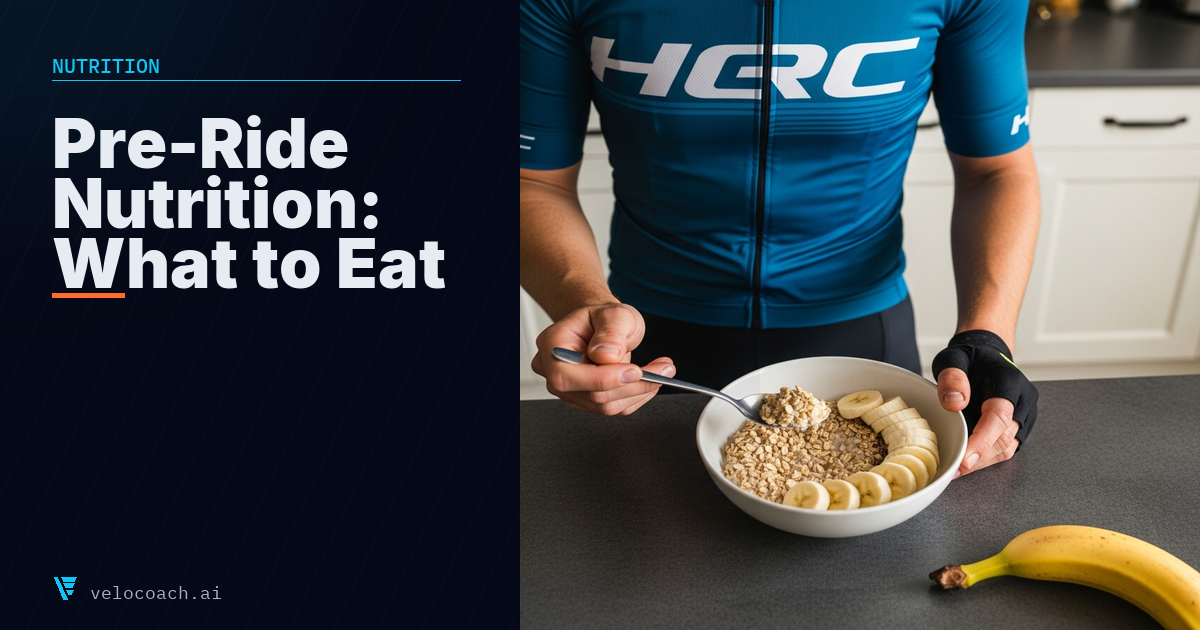
Practical options: porridge with banana and a small amount of honey, two slices of toast with peanut butter and jam, rice with eggs, pasta with a tomato-based sauce.
The 60-90 Minute Pre-Ride Window
Many cyclists ride early in the morning and cannot eat 3-4 hours before. A smaller, easily digested snack 60 to 90 minutes out is effective.
Target: 40 to 80g of carbohydrate from fast-digesting, low-fibre sources. Something that exits the stomach quickly and tops up blood glucose without sitting in the gut during the session.
Options: a banana, a small bowl of low-fibre cereal with milk, a slice of white toast with jam, a rice cake, a sports bar with simple carbohydrates.
Avoid high-fibre options (wholegrain bread, bran cereals, raw vegetables) and high-fat options (full-fat dairy, nuts in quantity) in this window. They slow gastric emptying and increase GI risk.
Immediate Pre-Ride (Under 30 Minutes)
Eating within 30 minutes of starting exercise is somewhat different. There is not enough time for significant digestion and glycogen storage, so the goal shifts to providing blood glucose substrate for the early part of the ride rather than filling muscle glycogen.
Small amounts of simple sugar (a gel, a banana, a sports drink) are fine in this window for most riders. Some athletes experience reactive hypoglycaemia from a carbohydrate hit immediately pre-exercise, when the insulin response peaks at the same time exercise is suppressing blood glucose. If you feel dizzy or unusually sluggish in the first 15 to 20 minutes of a session after eating immediately pre-ride, this is the likely cause. The solution is either to eat earlier or to consume the carbohydrate after the warm-up rather than before.
Session Type Adjustments
Not all rides need the same pre-ride fuelling approach.
Short Zone 2 sessions under 90 minutes: Glycogen availability is not a limiting factor. A small pre-ride snack or even starting fasted (if that is your deliberate intention) is appropriate. If you are using fasted training intentionally to drive fat oxidation adaptations, this is the session type to do it with.
Long Zone 2 rides (2 hours+): Arrive with full glycogen stores. Eat a proper meal 3 to 4 hours before. The ride duration means even at low intensity you will deplete glycogen meaningfully, and arriving already partly depleted shortens the effective training window.
Threshold and sweet spot sessions: These sessions make significant glycogen demands. Prioritise arriving fuelled. A proper pre-ride meal 3 to 4 hours before (if timing allows) or a meaningful snack 60 to 90 minutes out, is the right approach.
VO2 max intervals: Maximum aerobic power outputs are highly glycogen-dependent. The quality of short, maximal intervals degrades markedly when glycogen is low. These sessions require the best pre-ride nutrition of any session type.
Morning races or events: Prioritise a meal the evening before (carbohydrate loading if appropriate) and a small, easily digested pre-event snack 60 to 90 minutes before the start.
Caffeine Timing
If you use caffeine as a performance supplement (covered in its own post), timing relative to the ride matters more than the exact window. For most forms of caffeine (coffee, caffeine tablets, caffeinated gels), peak blood levels occur 45 to 60 minutes post-ingestion. Build this into your pre-ride routine: if you want peak caffeine effect from the start of a hard session, consume it 45 to 60 minutes before.
Note that coffee is also a gastric stimulant for many people. If you are sensitive to this effect, allow more time and ensure access to a bathroom before starting.
Hydration as Part of Pre-Ride Preparation
Arrive at a session well hydrated. Dehydration of even 2% of body weight reduces aerobic performance measurably. If your urine is dark yellow, you are starting in deficit.
A practical approach: consume 500ml of water or electrolyte drink in the 60 to 90 minutes before a session. If the session is long or conditions are hot, increase this. Do not try to achieve full hydration in the final 20 minutes, as you will simply feel full and bloated.
---
Train with a coach that reads your data
VeloCoach AI connects to Garmin, Wahoo, Intervals.icu and Apple Health, and tells you exactly what to do next.
Download on the App Store