Choosing a Power Meter: What You Need to Know Before You Buy
A power meter transforms how you train. Heart rate is a lagging indicator of effort, affected by fatigue, heat, caffeine, and stress in ways that make it imprecise as a real-time training guide. Speed depends on terrain, wind, and drafting. Power is the direct measure of the work you are doing on the bike, unaffected by external conditions, immediately responsive, and directly comparable across any terrain or session type.
If you are serious about cycling performance and do not have a power meter, it is the highest-return training investment you can make, above wheels, above aerodynamic components, and above most coaching interventions.
How Power Meters Work
All cycling power meters measure the small deformations (strain) in the bike structure caused by pedalling force, using strain gauges bonded to the measuring component. The strain is converted to power using the relationship: Power (watts) = Torque × Angular velocity (cadence).
The deformations being measured are tiny. The electronics and algorithms that convert them to accurate power measurements are the primary differentiator between power meter quality tiers.
Measurement Locations
Power meters are available at several locations on the bike, each with distinct implications for accuracy, cost, and fit compatibility.
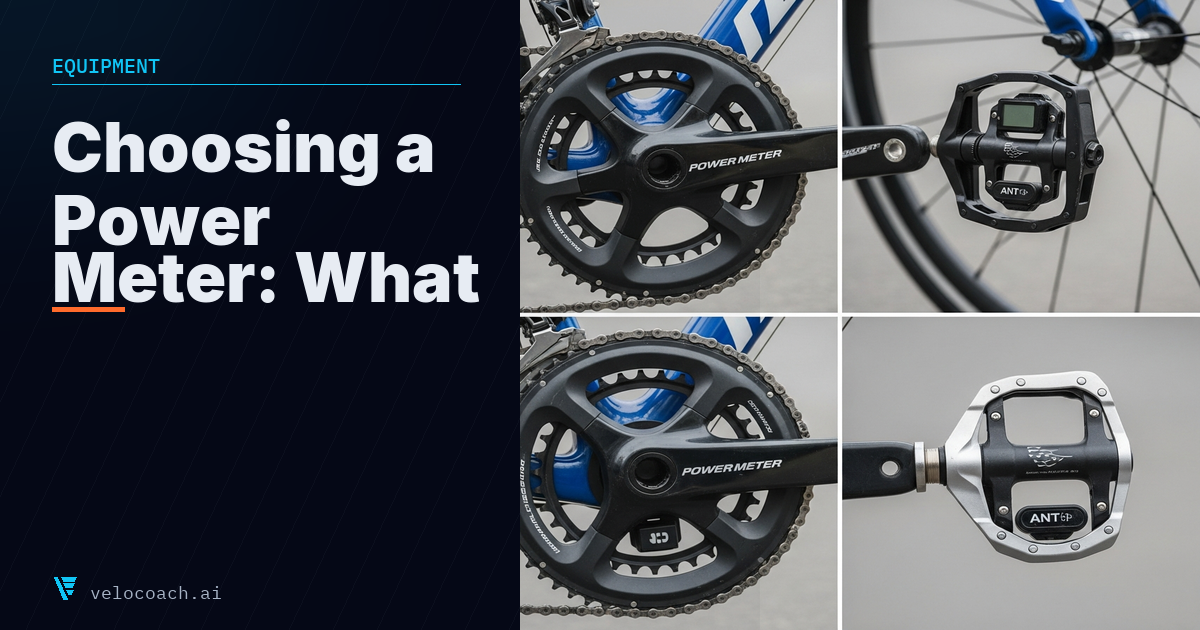
Pedal-based power meters: Installed in place of your standard pedals. The main advantage is portability: they transfer between bikes in minutes, making them ideal for cyclists who use a turbo trainer and a road bike. The main disadvantage is vulnerability to damage from foot placement and potential pedal contact in cornering.
Popular options: Garmin Rally (available in Look, Shimano, and SPD-SL fittings), Favero Assioma (excellent accuracy, competitive pricing), Wahoo Speedplay (dual-sided, unique pedal system).
Crank-based power meters: Integrated into or attached to the crank arm. Crank spindle systems (like Quarq and Power2Max) measure power from within the bottom bracket area, offering robust placement. Single-sided crank arm power meters (one side only, doubling the reading to estimate total power) are the entry-level option for most cyclists.
Popular options: Power2Max NG, Quarq DZero, Stages (single or dual-sided).
Chainring or spider-based power meters: Integrated into the spider or chainring, sitting between the crank arms and the chain. Accurate but typically more expensive and less swappable between bikes.
Hub-based power meters: Placed in the rear hub. Accurate and durable, but require a specific wheel build and cannot swap between bikes easily.
Single-Sided vs Dual-Sided
Single-sided power meters measure force on one leg only (usually the left) and double the reading to calculate total power. This assumes both legs contribute equally, which most cyclists do not. Research consistently shows a 2 to 5% leg power imbalance in most cyclists, and some individuals show 10% or more difference.
For training purposes, single-sided power is usually sufficient. The absolute accuracy matters less than consistency: if your left leg contributes 48% of total power and your right leg contributes 52%, and your power meter consistently reads as if left × 2, your training zones remain accurate even though the absolute wattage is slightly wrong.
For those who want true power imbalance measurement (for injury management or performance optimisation), dual-sided power meters are necessary. The price premium varies by brand and is worth it for serious athletes or those with known asymmetry issues.
Accuracy: What the Numbers Mean
Power meter accuracy is expressed as a percentage. A ±1% power meter reading 200W will read 198 to 202W for a true 200W output. A ±2% power meter will read 196 to 204W.
For training purposes, ±2% accuracy is adequate. The variation in your physiological state from session to session exceeds 1% power meter accuracy anyway.
What matters more for training is consistency, measured as the difference between readings from one session to the next. A power meter that reads consistently at 2% below true power is more useful for training than one that varies unpredictably between -1% and +3%.
Premium power meters from established brands (Garmin Rally, Favero Assioma, Quarq, Power2Max) typically achieve ±1 to 1.5% accuracy in practice. Entry-level options may advertise ±2% and achieve ±3 to 4% in real-world conditions.
What to Budget
The power meter market has compressed significantly in the last five years. Functional, accurate power meters are now available for:
Entry level (£200 to £350): Stages single-sided left-only crank arm power meters; Wahoo Speedplay dual-sided pedals (often on sale). Adequate for the majority of cyclists who want power data for training zones and FTP testing.
Mid-tier (£350 to £600): Favero Assioma Duo (dual-sided pedal power, excellent accuracy, widely regarded as best value in category); Stages dual-sided; Power2Max NG (crank spider). These are the sweet spot for most serious amateur cyclists.
Premium (£600 to £1,200+): Garmin Rally pedal systems (multiple cleat compatibility options, Vector ecosystem integration); Quarq; SRM (used primarily by professionals, exceptional accuracy and longevity).
Compatibility Checklist
Before purchasing, confirm:
- Pedal compatibility: Pedal-based power meters require compatible cleat systems. If you use Shimano SPD-SL cleats, you need a power meter in that fitting.
- Crank compatibility: Crank-based power meters are specific to crank brands, arm lengths, and chainring configurations. Verify before ordering.
- Bottom bracket compatibility: Some power meters require specific bottom bracket standards to work with your frame.
- Bike count: If you ride multiple bikes (road bike plus turbo trainer), a pedal-based power meter that swaps between them is more cost-effective than two separate meters.
First Steps With Your Power Meter
Once your power meter is fitted and calibrated (follow manufacturer instructions; typically involves a zero-offset procedure before each ride), the first task is establishing your FTP. Without an accurate FTP, training zones are guesswork.
Complete a ramp test or a properly paced 20-minute all-out test within the first week of having power data. Use the result to set zones, and resist the temptation to adjust these based on how sessions feel in the short term.
---
Train with a coach that reads your data
VeloCoach AI connects to Garmin, Wahoo, Intervals.icu and Apple Health, and tells you exactly what to do next.
Download on the App Store