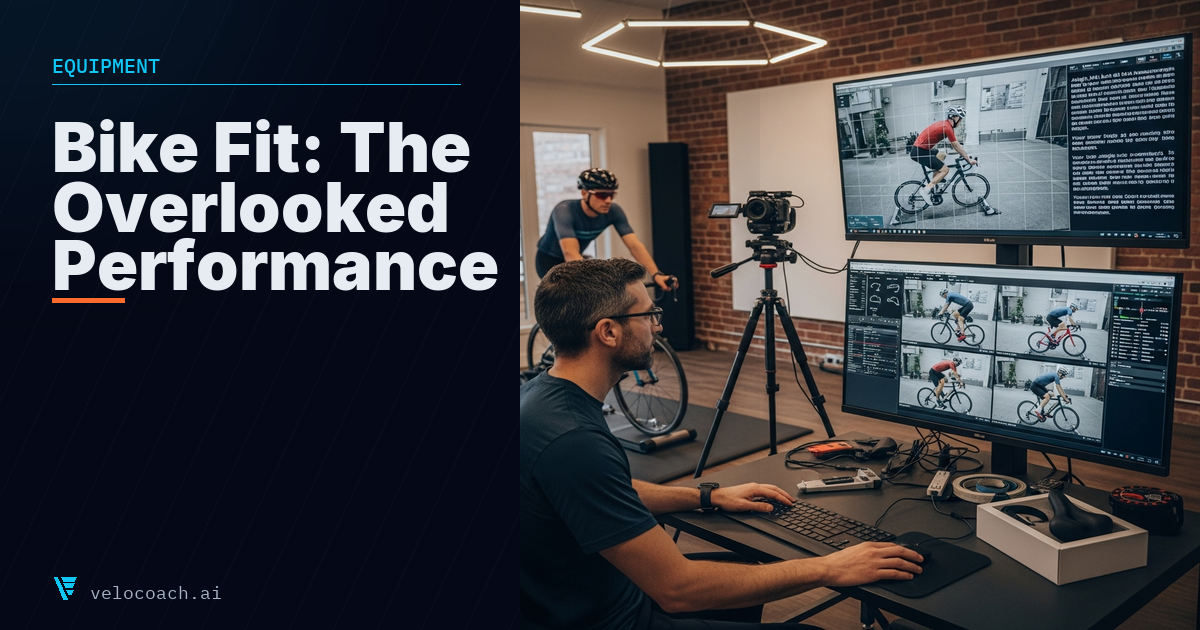
Bike Fit: The Overlooked Performance and Injury Prevention Lever
Cyclists spend thousands on marginal aerodynamic gains, deep-section wheels, and ceramic bearings. Many of them are riding on a bike that does not fit them correctly. A poor bike fit can waste 5 to 10% of power output, cause overuse injuries that interrupt training for months, and create chronic discomfort that makes every ride harder than it should be. A correct fit addresses all of these.
Bike fitting is also one of the most undervalued interventions in cycling because its benefits are often invisible. When your bike fits well, riding feels natural and comfortable. You have no way of seeing what injuries you did not get or what power you are not wasting. The absence of problems is not compelling marketing, but it is meaningful.
What Bike Fit Actually Covers
A comprehensive bike fit addresses multiple interacting variables. These are not independent; changing one often requires revisiting others.
Saddle height is the most performance-critical measurement. Too low: reduced power output, knee tracking issues, anterior knee pain. Too high: increased pedalling asymmetry, posterior knee strain, hip rocking at the saddle. The Achilles point of most bike fits.
Saddle fore-aft position determines the relationship between the knee and the pedal at the power position. Affects patellofemoral loading, hamstring and quad demand balance, and the angle of the knee at the bottom of the pedal stroke.
Saddle tilt is often overlooked. A slightly nose-down tilt for many cyclists (particularly on a performance road position) reduces perineal pressure and improves pelvic stability. Too much tilt in either direction creates problems.
Stack and reach define the overall body position over the bike. Stack (vertical height from bottom bracket to bar) and reach (horizontal distance) together determine your trunk angle, weight distribution, and aerodynamic profile. These are adjusted via stem length and angle, spacer configuration, and handlebar choice.
Cleat alignment is frequently wrong even after other measurements are correct. Cleat position affects knee tracking, ankle stress, and patellofemoral loading. Many cyclists ride with feet that toe in or out more than is neutral for their hip rotation, creating avoidable stress.
Signs Your Fit Needs Attention
Pain or discomfort: Any persistent discomfort beyond normal muscle fatigue is worth investigating. Specific patterns suggest specific problems:
- Anterior (front) knee pain: often saddle too low, cleats too far forward, or high cadence at low resistance
- Posterior (behind the knee) or hamstring pain: often saddle too high
- Lower back pain: usually reach too long, saddle height issues, or inadequate core strength for the positional demands
- Neck and shoulder pain: reach too long, or spending too much time in an unsupported position
- Perineal numbness: saddle tilt, saddle shape mismatch, or saddle height
Foot numbness or hotspots: Often cleat positioning issues (usually too far forward) combined with shoe stiffness.
Visible asymmetries: If a video of you riding from behind shows your hips rocking, one knee tracking outward while the other is neutral, or your trunk rotating unevenly, these are observable fit indicators.
Getting a Fit: What to Look For
Professional bike fitting ranges from basic adjustments (an hour with a knowledgeable LBS mechanic using their experience) to comprehensive assessments (2 to 4 hours with a specialist using dynamic video analysis, pressure mapping, and motion capture).
For most cyclists, a mid-level fit with a trained fitter using video analysis of you riding on your actual bike is appropriate. This typically runs £100 to £300 in the UK and addresses all major variables with video feedback.
What distinguishes a good fitter:
They watch you ride. A static fit is less useful than a dynamic fit. Your pedalling pattern, asymmetries, and compensatory movements only appear under load.
They ask about your history. Injury history, flexibility limitations, and riding goals all affect what a correct position looks like for you. The most aerodynamic position is not the correct position for a rider with a hip flexor injury.
They make small changes and reassess. A fitter who dramatically changes multiple variables in one session and sends you home is not following best practice. Changes should be gradual and assessed.
They follow up. Many fit changes require time to adapt to. A fitter who offers a follow-up session or check-in call is providing a more complete service.
When to Get a Fit
When you buy a new bike. This is the obvious time, but many cyclists skip it and assume the bike's default geometry is correct for them.
When overuse injury develops. Pain during or after riding that does not resolve with rest and standard training modifications warrants a fit review.
When your flexibility or body changes. Age, injury history, weight change, or changes in how flexible you are all affect the ideal position. A fit done at 35 may not be correct at 50.
When moving to a significantly different position. Switching from a relaxed endurance geometry to a performance position (or vice versa) warrants professional guidance.
Every few years. Even without a triggering event, your position evolves and your body changes. A periodic fit review catches accumulated drift before it becomes a problem.
Self-Adjustments Between Professional Fits
There are adjustments you can safely make yourself between professional fit sessions:
Saddle height: A minor adjustment of 2 to 3mm up or down is low-risk and worth trying if you have specific symptoms that correspond to typical height problems.
Cleat float: Increasing float (using yellow cleats rather than red, for example, on Shimano systems) reduces the precision requirement on cleat alignment and can reduce knee stress if you are between fit appointments.
Bar tilt and brake lever position: Minor adjustments to handlebar rotation and brake lever placement affect wrist comfort significantly and can be self-adjusted by feel.
Do not attempt to dramatically change stack, reach, or saddle fore-aft position without professional assessment. These variables interact in ways that self-assessment usually misses.
---
Train with a coach that reads your data
VeloCoach AI connects to Garmin, Wahoo, Intervals.icu and Apple Health, and tells you exactly what to do next.
Download on the App Store