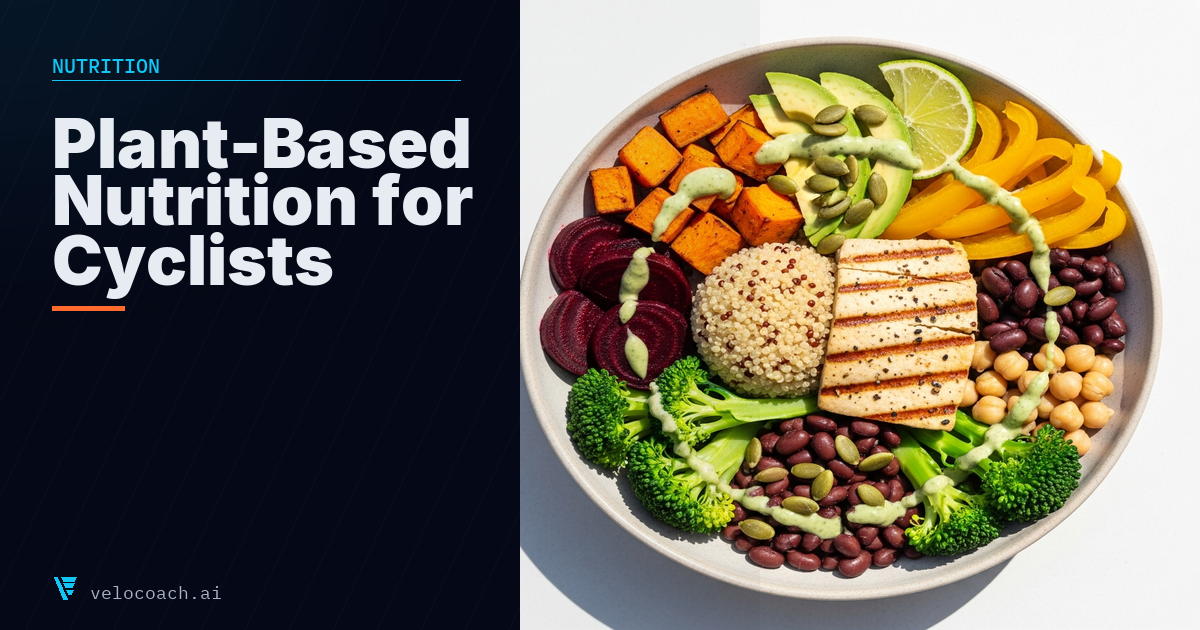
Plant-Based Nutrition for Cyclists: Making It Work for Performance
Plant-based and vegan cycling is more common than it was a decade ago, and the research has clarified what is and is not a concern for plant-based endurance athletes. The short version: performance on a well-planned plant-based diet is comparable to an omnivorous diet. The planning requirement is real, and the specific considerations for cyclists are worth understanding in detail.
What the Evidence Says
A 2023 meta-analysis in the European Journal of Clinical Nutrition found no significant difference in aerobic performance metrics between plant-based and omnivorous endurance athletes when total caloric and protein intake were matched. VO2 max, FTP, and time trial performance were not significantly different between groups.
The key phrase is "when matched." Plant-based diets that fall short on protein quantity, protein quality, or specific micronutrients produce measurable performance impairments. The diet is not inherently limiting; unplanned versions of it are.
Several elite endurance cyclists have performed at the highest level on plant-based diets. Dotsie Bausch, who won silver at the 2012 Olympics in team pursuit, is a well-known example. The diets of these athletes share a common characteristic: they are meticulously planned and nutritionally complete.
The Protein Challenge
This is the main practical consideration for plant-based cyclists.
Plant proteins have two relevant disadvantages compared to animal proteins:
Lower leucine content. Leucine is the amino acid that most directly triggers muscle protein synthesis. Animal proteins (particularly dairy and eggs) are higher in leucine per gram than most plant proteins. This means plant-based cyclists need slightly more total protein per kilogram to achieve the same MPS stimulus.
Incomplete amino acid profiles. Many individual plant proteins are low in one or more essential amino acids. Rice protein is low in lysine; pea protein is low in methionine; soy protein is more complete but still slightly below animal proteins in leucine content.
The solution is well understood: combine protein sources to create complementary amino acid profiles, and eat slightly more total protein. A plant-based cyclist should target 2.0 to 2.2g of protein per kilogram of body weight per day (compared to 1.6 to 2.0g/kg for omnivores), and combine sources throughout the day.
High-protein plant foods worth building meals around: tofu (15g per 100g), tempeh (19g per 100g), edamame, lentils, chickpeas, black beans, seitan (25g per 100g), hemp seeds (31g per 100g), pea protein powder.
The Micronutrient Watch List
Several micronutrients are harder to obtain in adequate amounts from plant-based diets. These are specific concerns for cyclists, not general nutritional issues to dismiss.
Vitamin B12: Found almost exclusively in animal products. B12 deficiency develops slowly (liver stores can sustain adequacy for years) but is serious when it occurs: impaired neurological function, fatigue, and impaired red blood cell production. Supplementation is non-negotiable for plant-based cyclists. 1,000mcg of cyanocobalamin or methylcobalamin daily, or a weekly high-dose supplement.
Iron: Plant-based sources of iron (non-haem iron from lentils, spinach, fortified foods) are absorbed at 2 to 20% efficiency compared to 15 to 35% for haem iron from meat. Cyclists already have higher iron requirements than sedentary individuals due to foot-strike haemolysis and sweat losses. Plant-based cyclists should combine iron-rich plant foods with vitamin C (which enhances non-haem iron absorption) and avoid tea or coffee within an hour of iron-rich meals (tannins inhibit absorption). Annual blood testing of ferritin, haemoglobin, and transferrin saturation is sensible.
Vitamin D: Covered in the supplements post; the concern is similar for plant-based and omnivorous athletes in northern climates. Supplement as needed based on blood testing.
Omega-3 fatty acids: Animal sources provide EPA and DHA directly. Plant sources (flaxseed, chia, walnuts) provide ALA, which converts to EPA and DHA in the body at low efficiency (5 to 15%). Plant-based cyclists should use an algae-derived omega-3 supplement (the original source from which fish accumulate omega-3, so this is not a compromise) providing 1 to 2g of combined EPA/DHA daily.
Zinc: Found in meat, shellfish, and dairy at higher bioavailability than plant sources. Legumes, seeds, and whole grains contain zinc but also phytates, which reduce absorption. Higher total zinc intake and soaking or sprouting legumes (which reduces phytate content) both help. Consider a modest zinc supplement (7 to 15mg/day) if dietary sources are uncertain.
Calcium: Dairy is the most abundant dietary calcium source in most western diets. Plant-based alternatives: fortified plant milks (check labels, should match cow's milk at ~120mg per 100ml), fortified tofu (set with calcium sulfate), kale, bok choy, almonds, and calcium-set tofu. 1,000mg per day is the target.
Creatine: Creatine is found in meat and fish. Plant-based athletes have significantly lower muscle creatine stores than omnivores. Creatine supplementation (3 to 5g per day) is particularly well-evidenced for plant-based athletes: a 2023 study found greater performance improvements from creatine supplementation in vegetarians than in omnivores, precisely because the baseline depletion is greater.
Carbohydrate: The Plant-Based Advantage
Plant-based diets are typically high in carbohydrate from whole food sources: fruits, vegetables, wholegrains, legumes. This is a genuine advantage for cyclists, who depend on carbohydrate as primary race fuel. Plant-based athletes often have naturally high muscle glycogen content relative to their body weight, which can support high-volume training well.
The fibre content of a whole-foods plant-based diet can cause GI discomfort during intense cycling in some athletes. If you experience GI issues during training, temporarily shifting toward lower-fibre carbohydrate sources (white rice, bananas, dates) around sessions is a sensible adjustment.
Practical Meal Building
A plant-based day that meets a 70kg cyclist's requirements (approximately 140g protein, 490g carbohydrate for a medium-intensity training day):
Breakfast: Porridge with oat milk, protein powder, banana, hemp seeds (35g protein, 80g carbohydrate) Pre-ride snack: Edamame and rice cakes (15g protein, 40g carbohydrate) Post-ride: Tofu stir-fry with noodles and broccoli (35g protein, 80g carbohydrate) Lunch: Lentil soup with bread, protein shake (30g protein, 100g carbohydrate) Dinner: Tempeh bowl with rice, mixed vegetables, tahini (30g protein, 120g carbohydrate) Evening: Soy yoghurt with seeds (15g protein, 30g carbohydrate)
Achievable, varied, and adequately fuelled.
---
Train with a coach that reads your data
VeloCoach AI connects to Garmin, Wahoo, Intervals.icu and Apple Health, and tells you exactly what to do next.
Download on the App Store