The Gut Microbiome and Cycling Performance: What the Research Says
The gut microbiome is the collection of trillions of microorganisms living in the human digestive tract. It has attracted extraordinary scientific attention over the past decade, with research linking microbiome composition to immune function, mental health, metabolism, and now endurance performance.
Cycling-specific microbiome research is still relatively early, but several findings have moved beyond speculation into genuinely useful guidance for how training, nutrition, and lifestyle choices affect gut health and, through it, performance.
How the Gut Microbiome Affects Performance
The mechanisms connecting gut microbiome composition to athletic performance are multiple and interconnected.
Short-chain fatty acid production: Certain gut bacteria ferment dietary fibre, producing short-chain fatty acids (SCFAs), primarily butyrate, propionate, and acetate. SCFAs have anti-inflammatory effects, support gut barrier integrity, and provide energy for gut epithelial cells. Research suggests some SCFAs may also serve as substrate for muscle energy production during exercise, though this pathway is less established.
Immune function: Approximately 70% of the immune system is located in the gut. The microbiome profoundly shapes immune responses. Athletes with lower microbiome diversity show higher rates of upper respiratory tract infections, a well-documented performance disruptor for competitive cyclists.
Inflammatory regulation: A diverse, healthy microbiome is associated with lower systemic inflammation. Chronic, low-grade inflammation impairs recovery from training, reduces adaptation capacity, and is associated with overtraining-like symptoms.
Mitochondrial function: Emerging research has identified microbiome-derived metabolites that influence mitochondrial biogenesis pathways, including PGC-1α activation. This is an active area of research but suggests the gut microbiome may partly mediate adaptations to endurance training.
Mood and motivation: The gut-brain axis connects microbiome function to neurotransmitter production (the gut produces substantial amounts of serotonin and GABA). Athletes with disrupted microbiomes report higher rates of fatigue, depression, and reduced training motivation, though causality versus correlation remains difficult to establish.
What Elite Endurance Athletes' Microbiomes Look Like
A 2019 study published in Nature Medicine compared the gut microbiomes of elite marathon runners to sedentary controls. Elite athletes showed higher abundance of Veillonella atypica, a bacterium that converts exercise-derived lactate into propionate, a short-chain fatty acid. When this bacterium was transplanted into mice, it improved their treadmill performance by 13%, providing evidence of a direct performance-microbiome link.
A 2024 study specifically in road cyclists found that athletes with higher microbiome diversity had lower post-race inflammatory markers and faster recovery of power output 48 hours after hard race efforts, compared to athletes with lower diversity.
These findings do not mean you can simply take a probiotic and improve performance. They suggest that training and nutrition habits that support microbiome diversity create a physiological environment more conducive to recovery and adaptation.
What Exercise Does to the Microbiome
Regular endurance exercise itself positively affects microbiome diversity. Well-trained athletes have measurably more diverse gut microbiomes than sedentary individuals, even when dietary differences are controlled for.
However, acute high-intensity exercise temporarily disrupts the gut. This is the physiological basis for exercise-induced gastrointestinal symptoms (nausea, cramping, diarrhoea) that affect 30 to 50% of endurance athletes during high-intensity training and racing. Gut blood flow is reduced during intense exercise (blood is redirected to working muscles), which stresses the gut epithelial lining and can allow bacteria and bacterial products to cross into circulation, triggering an inflammatory response.
This is not a reason to avoid intensity. It is a reason to protect gut integrity around hard training:
- Avoid high-fat and high-fibre foods in the 2 to 4 hours before very hard sessions
- Use trained gut approaches (gut training protocols) to improve GI tolerance
- Allow GI symptoms from hard sessions to inform fuelling strategy rather than pushing through significant discomfort
Nutrition for Microbiome Health
Fibre diversity: The single most important dietary factor for microbiome diversity is dietary fibre variety. Different types of fibre feed different bacterial communities. Eating a wide range of plant foods (aim for 30+ different plant foods per week, an evidence-based target from the American Gut Project research) supports a more diverse microbiome.
This includes fruits, vegetables, wholegrains, legumes, nuts, seeds, and herbs. Counting plant food variety, not just portions, is the relevant metric.
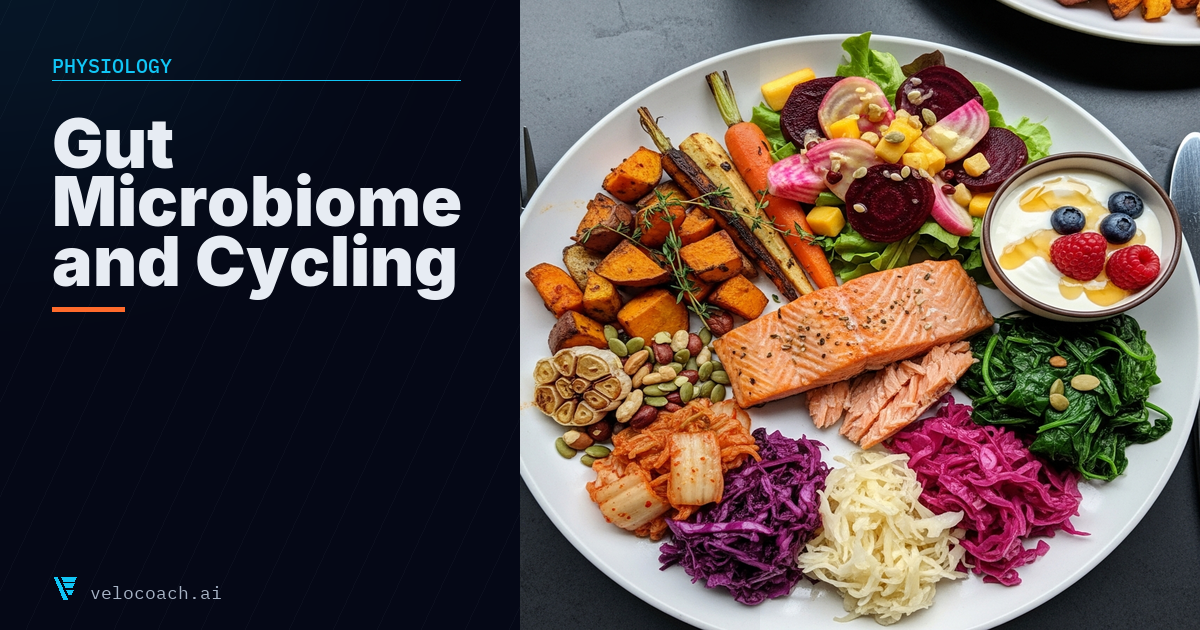
Fermented foods: Yoghurt (live cultures), kefir, sauerkraut, kimchi, miso, and kombucha contain live bacteria that temporarily increase microbiome diversity and have been shown to reduce inflammatory markers in clinical trials. A 2021 Stanford study found that increasing fermented food intake for 10 weeks significantly increased microbiome diversity and reduced 19 inflammatory markers compared to a high-fibre intervention alone.
Including one to two servings of fermented foods daily is a practical and evidence-supported approach for cyclists.
Prebiotics: Non-digestible food components that selectively feed beneficial gut bacteria. Found in foods including garlic, onions, leeks, asparagus, Jerusalem artichokes, bananas, and oats. These can also be consumed as supplements (inulin, fructooligosaccharides), though whole food sources are preferable.
Avoid unnecessary antibiotics: Antibiotics cause significant, sometimes long-lasting, microbiome disruption. When antibiotics are medically necessary, take them. But avoid pressure prescriptions for viral infections where they have no therapeutic effect but do have microbiome consequences.
Probiotics: The Reality
Probiotic supplements contain specific bacterial strains. Their effectiveness depends entirely on which strains are included and whether those strains have evidence for the specific outcome you want.
The strain Lactobacillus acidophilus NCFM and Bifidobacterium lactis Bi-07 combination has evidence for reducing upper respiratory infections in athletes, which is practically useful for reducing illness-induced training disruption. Some Lactobacillus strains have evidence for reducing GI symptoms during exercise.
Generic "probiotic" supplements making vague wellbeing claims without strain-specific evidence are not well-supported. If using probiotics, choose products that specify strains and have clinical evidence for your specific goal.
Practical Microbiome Habits for Cyclists
- Eat 30+ different plant foods per week (count them)
- Include one to two fermented food servings daily (yoghurt, kefir, kimchi, sauerkraut)
- Prioritise dietary fibre consistently, adjusting timing around hard sessions
- Avoid antibiotics except when medically necessary
- Limit highly processed foods, which are associated with reduced microbiome diversity
- Manage training load progression to avoid sustained high training stress, which is associated with microbiome disruption
---
Train with a coach that reads your data
VeloCoach AI connects to Garmin, Wahoo, Intervals.icu and Apple Health, and tells you exactly what to do next.
Download on the App Store