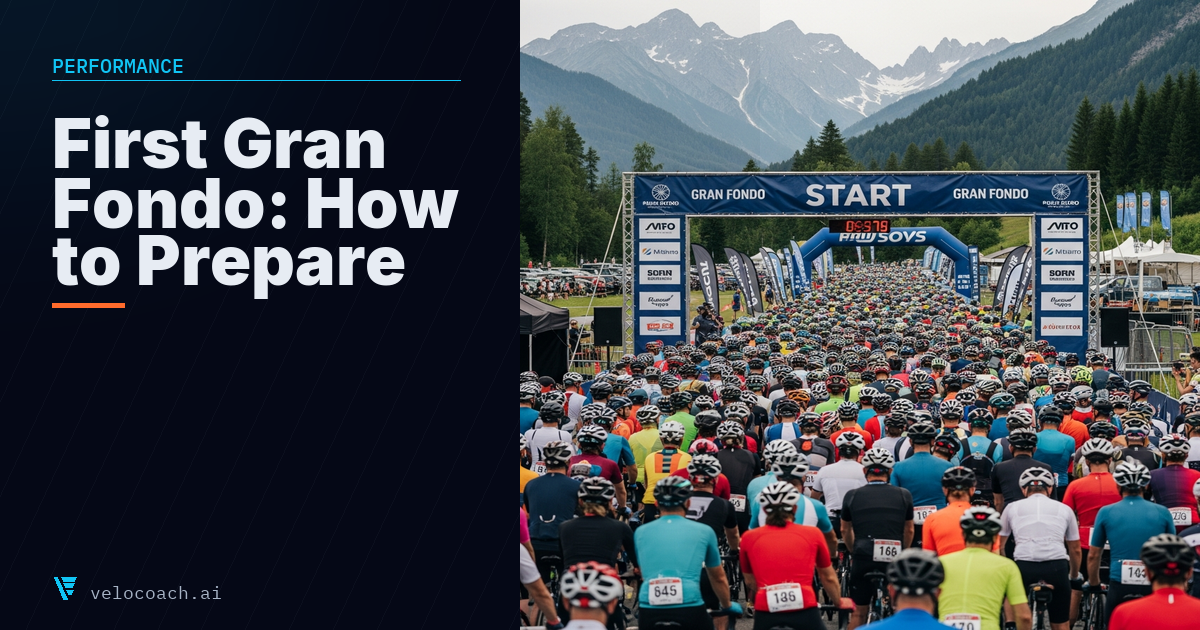
First Sportive: How to Prepare, Pace, and Survive Your Gran Fondo
Your first major sportive or gran fondo is an exercise in managing unknowns. The distance is longer than any training ride you have done, the terrain is unfamiliar, the fuelling requirements are higher than you have ever needed to manage, and the pacing decisions you make in the first hour will shape the entire day.
This guide covers what experienced riders have learned, often painfully, about how to approach a first major long-distance cycling event.
Training Preparation
The single most important preparation factor for a sportive is having adequate base fitness. A 100km sportive with 2,000m of climbing requires sustained aerobic output for 4 to 6 hours. No amount of race-day nutrition or equipment will compensate for insufficient aerobic base.
Minimum fitness foundation:
For a medium sportive (100km, 1,500m climbing), you should be capable of riding 3 to 4 hours comfortably at Zone 2 before the event. Your longest training ride in the 8 weeks before the event should be at least 75% of the sportive distance.
For a major event (160km, 3,000m+ climbing), you need a longer build. Your longest training ride should reach 100km, and you should have several 4-hour rides in your legs across the training block.
Build long ride frequency, not just length. Doing your longest ride ever the week before a major sportive is not ideal preparation. Build to that distance progressively over 6 to 10 weeks, allowing your fuelling strategy, pacing, and physical durability to adapt alongside the increasing distances.
Nutrition Planning Before the Day
Fuelling a long sportive requires deliberate planning. The goal is to carry enough fuel on the bike, know the feed station locations, and have a plan for what to eat at each point.
Two nights before: Eat normally but prioritise carbohydrates. This is not a carbo-loading feast; it is simply ensuring glycogen stores are well-topped heading into the 24 hours before the event.
The evening before: A high-carbohydrate dinner, eaten early enough that you feel comfortable by morning. Pasta, rice, bread. Not a massive volume, just carbohydrate-dense. Avoid high-fibre foods and anything that has previously caused GI issues.
Morning of: A familiar, carbohydrate-rich breakfast 2 to 3 hours before the start. Porridge, toast, banana. Nothing new. Race morning is not the time for dietary experimentation.
Bring your own food. Do not rely entirely on feed stations. Carry at least two to three hours of your own nutrition on the bike from the start, supplemented by whatever the feed stations offer.
Pacing on the Day
This is where most first-sportive experiences go wrong. The start of a large sportive has an energy and excitement that pulls everyone into riding harder than planned. Groups form and ride at the pace of their fastest members. The descents feel fast and the first climb feels manageable.
The first 30 to 60 minutes of a sportive should feel embarrassingly easy. If you think you might be going too slowly, you are probably going at about the right pace. The effort required in the second half of a major sportive, when fatigue is accumulated and you have been riding for 3 to 5 hours, will be dramatically higher than anything the first hour suggests.
Heart rate as a guide: If you have a heart rate monitor, targeting the lower end of Zone 2 for the first 90 minutes is a disciplined approach that most riders' final-hour performance will reward. Aim to arrive at the halfway point still feeling well within your capacity.
Power targets: If you have an FTP and a power meter, target 65 to 70% of FTP for the first hour of a very long event, building to 70 to 75% in the middle section, and allowing yourself to push harder on climbs toward the end. This is conservative by training standards and is exactly right for event standards.
Nutrition During the Event
The fuelling target for a long sportive is 60 to 90g of carbohydrate per hour from the moment you start, not just when you get hungry. Hunger is a lagging indicator. If you wait to eat until you feel hungry, you are already in deficit.
Practical plan: - Start eating within the first 30 minutes - Set a reminder (watch alarm, phone, mental note) to eat every 30 minutes - Use feed stations, but do not rely on them exclusively - Drink consistently throughout: aim for 500 to 750ml per hour in cool conditions, more in warm weather
The most common reason sportive participants have a miserable second half is not insufficient fitness, it is insufficient fuelling. Glycogen depletion ("the bonk") transforms a manageable effort into a survival experience. It is entirely preventable.
What to Carry
Basic kit list for a one-day sportive:
On the bike: Two full bidons (water and electrolyte), 3 to 4 energy bars or gels (your own tested products), a banana or real-food option, a small emergency snack.
On your person: Enough cash for a café stop if needed, a phone, basic emergency contact information.
Mechanical: Two spare inner tubes, tyre levers, mini pump or CO2 inflators, a multi-tool, a short length of electrical tape (emergency tyre boot).
The Day Before
Rest. Prepare your bike. Pack your kit. Eat normally. Do not do a long ride "to stay fresh." A 30 to 45-minute easy spin is fine; anything longer is counterproductive.
Lay everything out the night before so race morning is not a scramble. Set your alarm with enough time to eat breakfast 2.5 to 3 hours before your start time, not 20 minutes before.
Check the route. Know where the major climbs are. Know where the feed stations are. Know what the weather forecast says.
At the Start
Get to the start with time to spare. Use the facilities. Start at a group level appropriate for your pace, not at the front with riders who will drop you on the first climb. Sportives are not races; there is no benefit to starting in the fastest group if you will be dropped.
The first kilometres are often traffic-congested and slow. Use them to warm up physically and mentally, not to chase faster riders.
---
Train with a coach that reads your data
VeloCoach AI connects to Garmin, Wahoo, Intervals.icu and Apple Health, and tells you exactly what to do next.
Download on the App Store