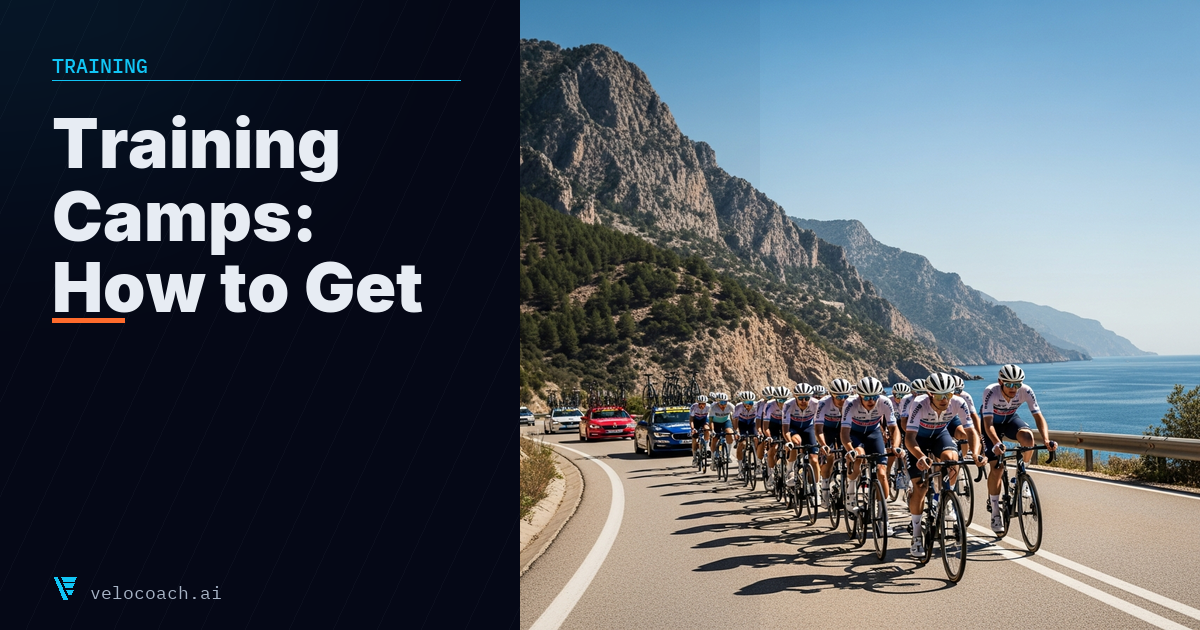
Training Camps: How to Get the Most Out of Them
A training camp is one of the highest-leverage investments a cyclist can make. A well-structured week of dedicated riding in good conditions, away from the noise and interruptions of normal life, can produce Fitness gains that take months to achieve through regular training. It can also leave you wrecked, overtrained, and slower for weeks afterwards if you approach it wrong.
The difference between a camp that launches your season and one that breaks your body comes down to a few specific decisions before, during, and after the week.
What Training Camps Actually Do to Your Body
The acute effect of a training camp is a large and rapid increase in Fatigue. If your normal weekly Load is 400 and your camp week delivers 800 over seven days, your Fatigue spikes significantly. Form goes deeply negative.
This is the intended outcome. A large, concentrated training stimulus drives adaptation that would take weeks of regular training to accumulate. The key is that the adaptation happens after the camp, during the recovery week that follows, not during the camp itself.
Misunderstanding this leads to the most common camp error: trying to perform at your best during the camp week. You will not. You should not expect to. By day four or five of a hard camp, most athletes are riding in a moderately fatigued state. The point is not to feel great every day. The point is to accumulate training stimulus that drives adaptation when you recover.
Before the Camp: Arrive Fresh
The week before a training camp should be a de-load week. Reduce training volume by 30 to 40% and avoid any particularly demanding sessions. Your Form should be rising toward or into positive territory by the time you depart.
Arriving at camp with a Form of +10 versus -20 means your body has maximum capacity to absorb the training you are about to do. Arriving already carrying a week of fatigue compresses the adaptation window available to you and increases injury risk during the higher-volume camp days.
Also arrive with: - All nutrition sorted. Do not improvise camp nutrition. Bring your usual bars, gels, and drink mixes so you are not relying on whatever is available locally. - Clear goals for the week. What is the camp for? Building base volume? Race-specific preparation? Altitude acclimatisation? Knowing the answer shapes the daily session structure. - Realistic expectations about how you will feel by day four or five.
Structuring the Camp Week
Day 1: Moderate. Resist the urge to do a massive first day because the weather is perfect and the legs feel fresh. A day one effort of 60 to 70% of what you want to do by day three allows you to assess your form, the terrain, and the group pace without overcooking the first 24 hours.
Days 2-4: Peak effort. These are the core camp days. Long rides, climbs, and quality sessions sit here while fatigue has not yet accumulated to a point where quality degrades significantly. If you are including any interval work, do it here.
Day 5-6: Reduce. Some fatigue will have accumulated. Reduce the day's duration and intensity slightly. Long, moderate-effort days work well here without the pressure of maximum performance.
Day 7 (if applicable): Easy or travel day. A short easy ride to keep the legs moving but allow early recovery from the week's accumulation.
Total camp Load targets: - A focused but manageable camp: 800 to 1,000 for the week - A serious training camp: 1,000 to 1,400 - Elite or professional-level: 1,400+ (not applicable to most amateur cyclists)
During the Camp: The Daily Discipline
Fuelling is the biggest lever. During camp, your carbohydrate requirement is substantially higher than normal training. A rider logging a Load of 1,200 across a camp week is burning significantly more calories than at home. Under-fuelling through the week is the most common performance and recovery mistake.
Aim for 60 to 90g of carbohydrate per hour on any ride over two hours. Start your post-ride recovery nutrition within 30 minutes. Eat larger meals than you think you need. Camp is not the week for caloric restriction.
Sleep is non-negotiable. The physiological work of a training camp happens during sleep. Eight to nine hours per night is the minimum. If group social activities are running late into the evening, make the calculation consciously: late social nights cost adaptation.
Know when to back off. Some days you will feel worse than expected. Sustained acute illness, significant joint pain, or a resting HR more than ten beats above normal are all signals to shorten or abandon a day's session. One lost camp day costs far less than an injury or illness that extends into the following weeks.
After the Camp: The Recovery Week
The week after a training camp is as important as the camp itself. Your Fatigue is high, your Form is deeply negative, and your body has the raw material for a significant adaptation if you allow it to happen.
Reduce volume to 30 to 40% of a normal training week. Avoid any hard intensity work for the first five to seven days. Zone 1 and easy Zone 2 riding only. The supercompensation from the camp stimulus happens in this window.
Most athletes want to jump back into hard training immediately after camp because they feel like they lost fitness during the reduced camp closing days. This is wrong. The adaptation window is ongoing. Protect it.
After ten to fourteen days of proper post-camp recovery, most athletes see their best Fitness and performance of the year. This is why camp timing matters: plan your camp so the recovery window falls before your first target event, not after it.
---
Train with a coach that reads your data
VeloCoach AI connects to Garmin, Wahoo, Intervals.icu and Apple Health, and tells you exactly what to do next.
Download on the App Store