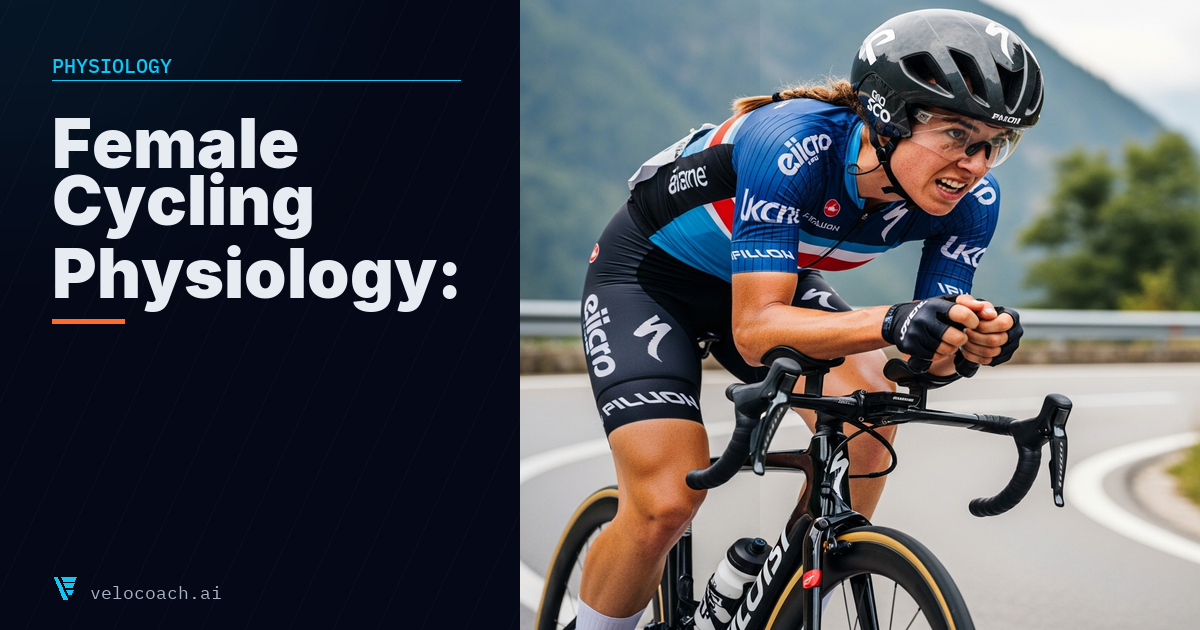
Female Cycling Physiology: Training with the Hormonal Cycle
Most cycling training research has been conducted in male subjects. The majority of training plans, periodisation frameworks, and performance guidelines were developed based on male physiology. This is beginning to change, but it means female cyclists have historically been trained on plans designed for a physiologically different body.
Understanding the specific ways female physiology differs from male, and how to account for those differences in training, is genuinely useful for performance and for long-term athletic sustainability.
The Key Physiological Differences
Hormonal cycle: The most significant difference between male and female endurance athletes is the menstrual cycle. Over approximately 28 days (with significant variation between individuals), oestrogen and progesterone fluctuate dramatically, with measurable effects on physiology, performance, and recovery.
Relative VO2 max: Female cyclists generally have a lower absolute VO2 max than male cyclists of similar training age, primarily due to differences in haemoglobin concentration, heart size, and muscle mass. However, relative VO2 max (expressed per kilogram of body weight) is less different, and differences in relative aerobic power are far smaller than absolute comparisons suggest.
Substrate utilisation: Female athletes oxidise more fat at equivalent relative intensities than male athletes. This has implications for fuelling: female cyclists may require less carbohydrate per hour at moderate intensities to maintain performance, though the differences are smaller at higher intensities.
Body composition: Average female cyclists have higher body fat percentages than male cyclists at equivalent training volumes. This affects power-to-weight ratio but does not directly limit absolute aerobic capacity.
Recovery and overtraining risk: Some evidence suggests female athletes are more susceptible to the performance consequences of energy deficiency (Relative Energy Deficiency in Sport, RED-S) than male athletes, partly due to hormonal sensitivity to energy balance.
The Menstrual Cycle and Performance
The menstrual cycle is divided into two main phases: the follicular phase (days 1 to 14, from menstruation to ovulation) and the luteal phase (days 15 to 28, from ovulation to the next menstruation).
These phases are physiologically distinct in ways relevant to training:
Follicular phase: Oestrogen is the dominant hormone, rising through this phase. Research finds that many female athletes feel strongest and most able to perform and recover in the late follicular phase (days 10 to 14), particularly the days around ovulation when oestrogen peaks and before progesterone rises.
Training response in the follicular phase: good recovery, high readiness to train, better tolerance for high-intensity work. This is typically when performance feels most like it does during a well-rested phase.
Luteal phase: Progesterone rises significantly after ovulation, particularly in the second half of the luteal phase (days 20 to 28). Progesterone has several physiologically relevant effects:
- Elevates resting body temperature by 0.2 to 0.5°C, which affects heat management during exercise
- Increases ventilation rate (breathing feels harder at a given power output)
- May increase perceived exertion at equivalent workloads
- Affects carbohydrate and protein metabolism (higher protein catabolism)
- Can affect sleep quality in the late luteal phase (the pre-menstrual week)
Many female cyclists report that training in the late luteal phase feels disproportionately hard relative to power output. Heart rate tends to be higher for a given power, perceived effort is elevated, and recovery may take longer. This is not weakness or mental fragility; it is progesterone's measurable physiological effects.
Menstruation (days 1 to 5): The drop in hormones at the start of menstruation is associated with a transition period where many athletes feel temporarily worse. Iron losses through blood also accumulate over months and years if not accounted for in dietary iron intake.
Training Periodisation With the Menstrual Cycle
Rather than trying to fight the hormonal cycle, intelligent training periodisation works with it:
High-intensity and key sessions: Consider scheduling the most demanding training (VO2 max intervals, race simulations, threshold blocks) in the late follicular phase when recovery capacity and performance readiness are typically highest.
Moderate volume, moderate intensity: Base training and sweet spot work can continue across both phases without significant modification for most athletes.
Reduce intensity expectations in the late luteal phase: Rather than judging yourself against the same targets as the follicular phase, adjust expectations. If a session feels harder than normal and heart rate is elevated at the same power, this is likely hormonal rather than fitness regression. Adjust the session intensity to match how the body is responding rather than pushing against it.
Increase recovery emphasis pre-menstrually: Building in additional rest or active recovery in the final 5 to 7 days before menstruation can protect quality sessions earlier in the phase and reduce cumulative fatigue.
A 2023 study of competitive female cyclists found that athletes who systematically adjusted their training intensity based on menstrual cycle phase showed greater improvements in FTP over a 12-week period than those who followed a phase-agnostic training plan, suggesting the adaptive approach has measurable benefits.
Tracking the Cycle
Apps like Natural Cycles, Clue, and others track cycle data and can overlay it with training data on platforms including Whoop and Garmin. Having a complete picture of where you are in your cycle when reviewing training data helps contextualise unusual sessions rather than misinterpreting them as fitness problems.
Noting perceived effort, readiness, and energy level alongside cycle phase for 2 to 3 months provides individual data that is far more useful than population averages.
RED-S: A Serious Risk in Cycling
Relative Energy Deficiency in Sport (RED-S), formerly called the Female Athlete Triad, occurs when caloric intake is insufficient to support both training demands and normal physiological function. Female cyclists are at higher risk than many realise, particularly during deliberate weight loss phases or inadvertently during high-volume training.
Symptoms include irregular or absent menstruation (amenorrhoea), reduced bone density, impaired immune function, persistent fatigue, and eventually performance decline. Amenorrhoea is a particularly significant red flag and should never be normalised as "just what happens with heavy training."
If your menstrual cycle has become irregular since increasing training volume or reducing caloric intake, consult a sports medicine doctor. Bone density losses from hormonal disruption can be permanent.
---
Train with a coach that reads your data
VeloCoach AI connects to Garmin, Wahoo, Intervals.icu and Apple Health, and tells you exactly what to do next.
Download on the App Store